
In the 2024 Hulu documentary Thank You, Goodnight: The Bon Jovi Story, Jon Bon Jovi describes what was happening to his voice with disarming clarity: one vocal cord had become as thick as his thumb, while the other had thinned to the size of his pinky finger. That gap — just a few millimeters of empty air — was enough to end a 40-year career. What closed it was a procedure most people have never heard of: medialization thyroplasty. I want to explain exactly what that surgery does, why it works, and what the road back from it actually looks like.
What Actually Happened to Jon Bon Jovi’s Voice?
Vocal Cord Atrophy — Not the Same as Paralysis
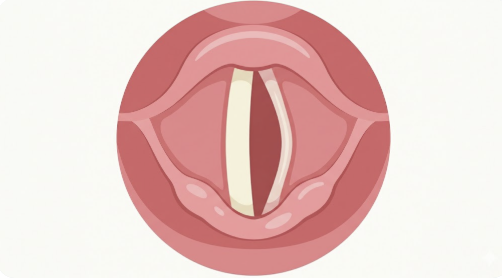
When most people hear “vocal cord surgery,” they picture a growth being removed or a cord that’s been paralyzed by nerve damage. What Bon Jovi had was different: vocal cord atrophy, a condition where the tissue of one or both vocal folds gradually thins and loses bulk.
Under normal conditions, the two vocal cords meet precisely at the midline during speech and singing, vibrating together to produce sound. When one cord atrophies — becoming thinner and bowing outward — a gap opens between them. Air escapes through that gap instead of being converted into vibration. The result is a breathy, weak voice that fatigues quickly and loses its upper range. Clinically, we call this glottic insufficiency.
This is distinct from vocal cord paralysis, where a nerve injury prevents the cord from moving at all — though prolonged paralysis can itself lead to muscle atrophy and bowing over time. In atrophy without paralysis, the cord still moves — it simply no longer has enough bulk to make contact with its partner. The underlying cause in Bon Jovi’s case, as he has described in multiple interviews, was decades of intensive performance. “40 years of hard work,” he told NPR in 2024. His surgical team confirmed the diagnosis; the rest is his own account.
Why Does This Happen to Professional Singers?
Professional singers place extraordinary demands on their laryngeal musculature night after night, year after year. Over decades, the vocalis muscle — the core of the vocal fold — can lose mass, much like any muscle subjected to chronic strain without adequate recovery. Age-related vocal fold thinning, known as presbylarynx, can compound this process, though I am not in a position to assign a specific diagnosis to any individual beyond what they have publicly disclosed.
Conservative management — voice therapy, vocal exercises, and injection augmentation of the vocal fold with materials such as hyaluronic acid — is always the first step. When these measures fail to restore adequate glottic closure, surgery becomes the appropriate next option. That is probably the threshold Bon Jovi reached before undergoing the procedure in the summer of 2022.
Medialization Thyroplasty — The Surgery Explained
The Concept: Moving the Cord Without Touching It
Medialization thyroplasty belongs to a family of procedures called laryngeal framework surgery, first systematically classified by Dr. Nobuhiko Isshiki and colleagues in 1974 (Isshiki et al., Acta Otolaryngologica, 1974). The defining principle of this entire surgical family is elegant: instead of cutting the vocal cord itself, the surgeon operates on the thyroid cartilage — the firm outer housing of the larynx — to mechanically reposition the cord from the outside.
Think of it like adjusting the position of a guitar string not by touching the string, but by shifting the bridge underneath it. The delicate vibrating structure of the vocal fold — its layered mucosa and lamina propria — remains completely undisturbed. This dramatically reduces the risk of scarring that plagues direct microlaryngeal surgery.
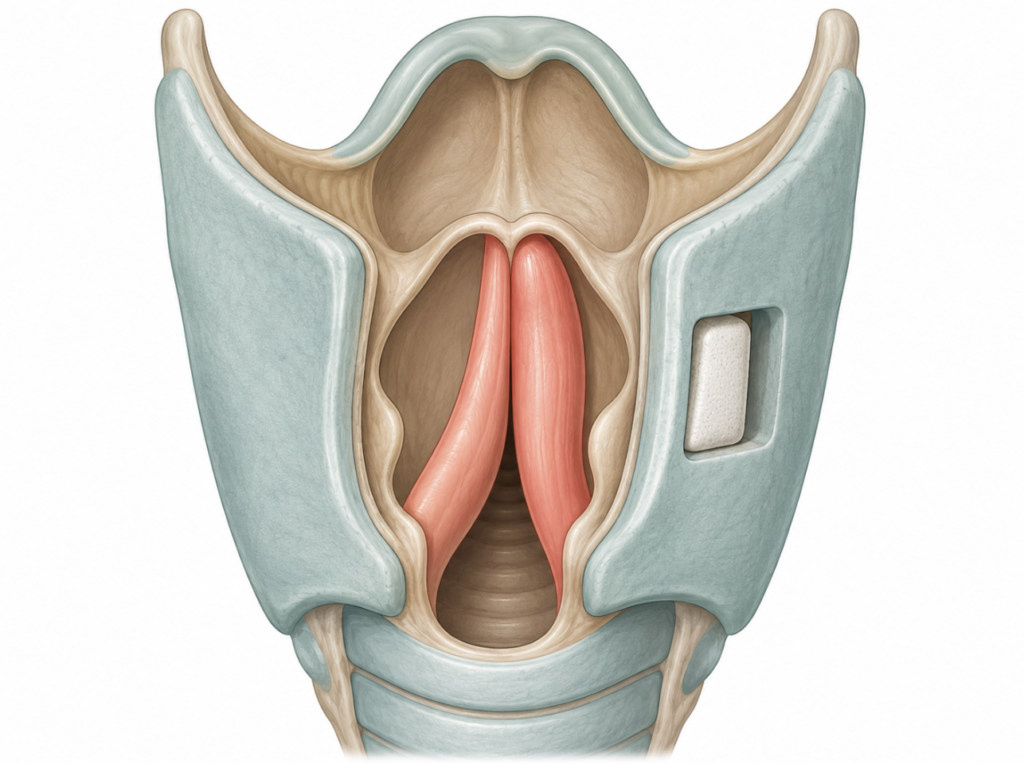
The Type I (medialization) variant, introduced with modern implants by Kaufman in 1986, is the one used for vocal cord atrophy and paralysis. It is one of the most commonly performed laryngeal framework procedures worldwide.
What Happens in the Operating Room
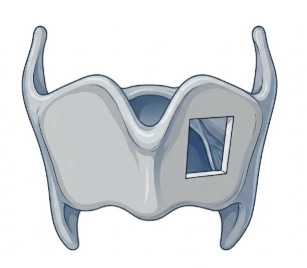
A rectangular window — typically 5–6 mm tall and 10–12 mm long in male patients (4–5 mm by 8–10 mm in female patients) — is carefully outlined on the outer surface of the thyroid cartilage, positioned to align precisely with the level of the vocal fold. The placement matters enormously: even a 1–2 mm error in position changes the acoustic outcome.
Once the window is cut, the inner perichondrium is elevated to create a pocket between the cartilage and the vocal fold. An implant is then introduced into this pocket and used to push the atrophied cord toward the midline, closing the gap that has been stealing the patient’s voice.
Why Gore-Tex?
Bon Jovi has mentioned in interviews that his surgery involved Gore-Tex — the same synthetic material found in outdoor gear. In medicine, Gore-Tex refers to expanded polytetrafluoroethylene, or ePTFE, a material that has been used in vascular surgery since the 1970s and carries an extensive safety record.
What makes ePTFE particularly well suited for vocal cord surgery is its microporous structure. Tiny pores within the material allow surrounding tissue to grow into the implant over time, anchoring it in place and dramatically reducing the risk of displacement. Unlike solid silicone — which remains a separate, movable object inside the cartilage pocket — a Gore-Tex ribbon gradually integrates with the host tissue.
There is a second advantage that matters enormously to patients: reversibility. Because ePTFE does not form dense scar tissue, it can be removed or repositioned years later if the voice changes or if further adjustment is needed. For a professional performer who may need fine-tuning as their voice evolves with age, this is a meaningful clinical benefit.
The Detail Nobody Mentions: The Patient Is Awake
This is the part of medialization thyroplasty that surprises almost everyone I explain it to. The procedure is typically performed under local anesthesia with light sedation — meaning the patient remains conscious throughout.
This is not an oversight or a cost-cutting measure. It is a deliberate technical requirement. The surgeon needs the patient to phonate — to produce sound — repeatedly during the procedure, in order to assess the acoustic effect of the implant in real time. A flexible laryngoscope is used simultaneously to visualize the vocal folds and confirm that the implant is closing the gap correctly. The surgeon adjusts the position and size of the implant until the patient’s voice reaches its optimal quality, then fixes everything in place.
This makes the patient an active participant in the surgery itself. No anesthesiologist-induced silence can replicate what a conscious patient’s voice reveals about implant placement. For Bon Jovi — whose livelihood depends on that voice being exactly right — the precision this approach allows was not optional.
Was the Recovery Really That Long?
Bon Jovi underwent surgery in the summer of 2022. His Forever Tour opens at Madison Square Garden on July 7, 2026 — nearly four years later. Is that timeline medically expected, or unusually long?
The honest answer is: both, depending on what you mean by “recovered.”
From a surgical standpoint, medialization thyroplasty has a relatively rapid functional recovery. Patients typically observe a period of voice rest, followed by structured voice rehabilitation with a speech-language pathologist. Basic vocal function — conversational speech — is typically restored within days to a few months, depending on the degree of atrophy and how the tissue responds to the implant.
But “able to talk” and “able to headline a two-and-a-half-hour stadium concert night after night” are not the same outcome. Bon Jovi has been transparent about what the rehabilitation involved: daily rehearsal sessions, gradual re-expansion of his vocal range, and a lengthy process of learning to perform within his voice’s new parameters. He described rehearsing for hours each day in his garage, rebuilding stamina the way an athlete returns from injury — not a straight line, but a long curve.
It is also worth noting that vocal cord surgery does not restore the voice to its exact pre-injury state. The biomechanics of the larynx change. The voice that emerged from Bon Jovi’s recovery is a voice that has been rebuilt, not simply repaired.
Clinical Perspective
From an ENT surgeon’s viewpoint, Jon Bon Jovi’s case is a near-textbook illustration of why medialization thyroplasty exists.
Most patients who come to us with glottic insufficiency are not rock stars. They are teachers who can no longer project their voice across a classroom, executives who struggle to be heard in meetings, elderly patients who aspirate liquids because their vocal cords no longer close completely during swallowing. The surgery that returned Bon Jovi’s voice to concert-hall volume is the same surgery that gives a retired school principal her voice back for a grandchild’s graduation speech.
What Bon Jovi’s story communicates unusually well — because he had the platform to document it publicly — is the non-linearity of recovery. Four years is not failure. It is what biological adaptation to a precision surgical correction actually looks like, particularly when the performance standard is an elite one.
His 2026 Forever Tour is not just a comeback. It is a calibrated endpoint.
This article is intended for general informational purposes only and does not constitute medical advice, diagnosis, or treatment. Consult a qualified ENT specialist for any concerns about your own voice or vocal health.
Key Takeaways
- Jon Bon Jovi underwent Type I medialization thyroplasty in 2022 after vocal cord atrophy created a gap preventing normal glottic closure during phonation.
- Medialization thyroplasty is a laryngeal framework surgery — the implant is placed inside the thyroid cartilage, not on the vocal cord itself, preserving the delicate mucosal vibrating surface.
- Gore-Tex (ePTFE) is commonly preferred in many cases because its microporous structure promotes tissue integration and allows future removal without scar formation.
- The procedure is performed under local anesthesia so the patient can phonate in real time, allowing the surgeon to optimize implant position acoustically rather than anatomically.
- Full return to elite vocal performance after medialization thyroplasty can take years of structured rehabilitation; Bon Jovi’s four-year arc reflects the biological reality of professional-grade recovery.
FAQ
What exactly is medialization thyroplasty?
It is a laryngeal framework surgery in which a small window is cut in the thyroid cartilage and an implant — typically Gore-Tex or silicone — is inserted to push an atrophied or paralyzed vocal cord toward the midline, restoring glottic closure. The vocal cord itself is not cut or directly manipulated.
What is the difference between vocal cord atrophy and vocal cord paralysis?
Paralysis results from nerve damage and prevents the cord from moving. Atrophy involves thinning of the cord’s tissue bulk, so the cord moves but can no longer make firm contact with its partner. Both conditions can cause glottic insufficiency, but they have different causes and may require different treatments.
Can vocal cord atrophy be treated without surgery?
Voice therapy and vocal cord injection augmentation (with hyaluronic acid or similar materials) are first-line treatments. Surgery is appropriate when conservative measures fail to achieve adequate glottic closure.
Why is the patient awake during medialization thyroplasty?
Real-time acoustic feedback from the patient’s voice is essential for precise implant positioning. The surgeon adjusts the implant while the patient phonates, then confirms closure with a laryngoscope. General anesthesia would eliminate this feedback loop.
Why did Bon Jovi take four years to return to touring?
Medialization thyroplasty restores baseline vocal function relatively quickly, but returning to elite performance requires extensive rehabilitation — rebuilding range, stamina, and technique within the altered laryngeal anatomy. His timeline reflects professional-grade recovery, not a surgical complication.
Joonpyo Hong, MD is a board-certified otolaryngologist practicing in Korea. This article reflects his clinical interpretation of published research and does not constitute individual medical advice.
References
Medical Literature
- Isshiki N, Morita H, Okamura H, Hiramoto M. Thyroplasty as a new phonosurgical technique. Acta Otolaryngologica. 1974;78(5-6):451–457.
- Zeitels SM, Mauri M, Dailey SH. Medialization laryngoplasty with Gore-Tex for voice restoration secondary to glottal incompetence: indications and observations. Annals of Otology, Rhinology & Laryngology. 2003;112(2):180–184.
- van Ardenne N, Vanderwegen J, Van Nuffelen G, De Bodt M, Van de Heyning P. Medialization thyroplasty: vocal outcome of silicone and titanium implant. European Archives of Oto-Rhino-Laryngology. 2011;268(1):101–107.
- Kwon TK, Rosen CA, Gartner-Schmidt J. Preliminary results of a new temporary vocal fold injection material. Journal of Voice. 2005;19(4):668–673.
- Son JH. Chapter 44: Medialization Thyroplasty. In: Laryngology and Voice Disorders. Korean Society of Laryngology, Phoniatrics and Logopedics.
Sources
- NPR. “I can only give the best: Jon Bon Jovi on vocal surgery and the road to recovery.” July 4, 2024. https://www.npr.org/2024/07/04/g-s1-8072/jon-bon-jovi-vocal-surgery-recovery
- NPR. “Jon Bon Jovi reflects on vocal surgery and recovery in ‘Thank You, Goodnight.'” April 29, 2024. https://www.npr.org/2024/04/29/1247749402/jon-bon-jovi-thank-you-goodnight
- Today.com. “Jon Bon Jovi’s Health: Vocal Cord Surgery, Recovery, Upcoming Tours.” 2024. https://www.today.com/health/jon-bon-jovi-health-rcna148884
- Fox News. “Jon Bon Jovi announces comeback tour after surgery saved his ‘dying’ vocal cord.” October 22, 2025. https://www.foxnews.com/entertainment/jon-bon-jovi-announces-comeback-tour-after-surgery-saved-his-dying-vocal-cord-from-career-ending-damage
- Rolling Stone. “Bon Jovi Announce 2026 ‘Forever’ Tour.” October 22, 2025. https://www.rollingstone.com/music/music-news/bon-jovi-forever-tour-2026-1235452196/
For more interesting contents:
https://curiousmd.com/how-ai-voice-cloning-works/
https://curiousmd.com/cnn-laryngeal-cancer-diagnosis/
https://curiousmd.com/long-term-effects-of-vaping-vs-smoking-ent/
Link out to:
https://my.clevelandclinic.org/health/treatments/22748-thyroplasty: medialization thyroplasty
https://medicine.uiowa.edu/iowaprotocols/medialization-laryngoplasty-type-i-thyroplasty-eptfe-gore-tex: Why Gore-Tex?
https://www.npr.org/2024/07/04/g-s1-8072/jon-bon-jovi-vocal-surgery-recovery: 40 years of hard work