
About 1.5 billion people worldwide live with hearing loss, yet only 17% of those who could benefit from a hearing aid actually use one — a service gap of over 83% [World Health Organization, World Report on Hearing, 2021]. The question of PSAP vs hearing aid — whether a $30–$500 consumer electronics device can substitute for a regulated medical device — has attracted growing clinical attention as a potential solution to this affordability gap. A 2022 systematic review found no statistically significant difference in speech intelligibility between PSAPs and conventional hearing aids for mild-to-moderate hearing loss [Chen, Comparison of personal sound amplification products and conventional hearing aids for patients with hearing loss, 2022]. This article breaks down what the research actually says, where the performance gaps lie, and what conditions those differences depend on.
What Is a PSAP? FDA Classification Explained
A PSAP is defined by the FDA as a wearable electronic product intended to amplify sounds for people without hearing impairment — for recreational use such as birdwatching or listening to a distant lecture. Because PSAPs are not intended to treat, diagnose, or compensate for hearing loss, the FDA does not classify them as medical devices. They are regulated instead as consumer electronics under the Radiation Control for Health and Safety Act of 1968.
Hearing aids, by contrast, are FDA-regulated Class I or Class II medical devices explicitly intended to compensate for impaired hearing. Since August 2022, a third category — over-the-counter (OTC) hearing aids — became available without a prescription, legally intended for adults with perceived mild-to-moderate hearing loss. This regulatory distinction matters: hearing aids must demonstrate safety and efficacy before reaching the market; PSAPs do not.
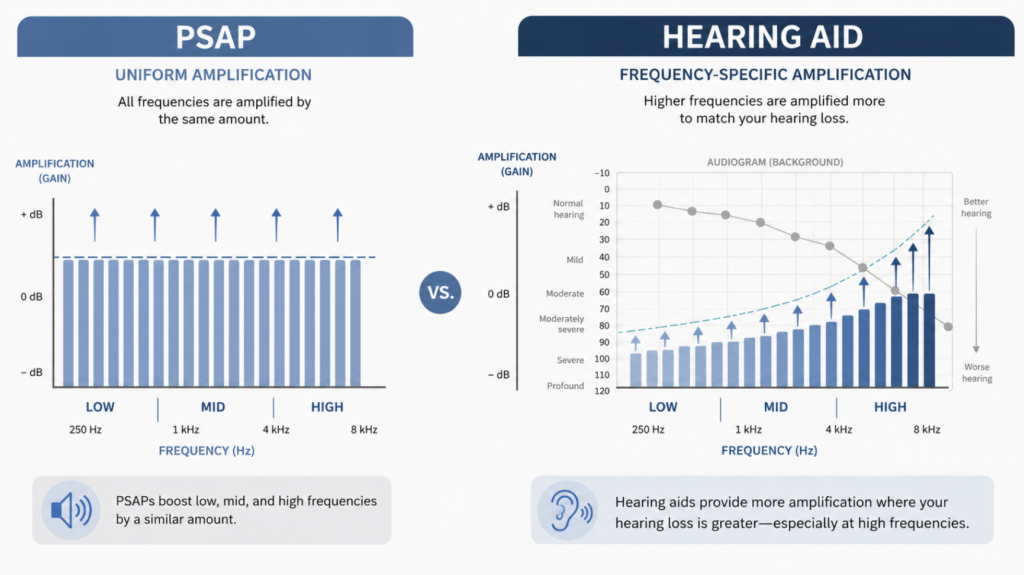
The practical consequence is that a PSAP amplifies all incoming sound uniformly, whereas a hearing aid — particularly a premium model — applies frequency-specific gain calibrated to an individual’s audiogram.
PSAP vs Hearing Aid: Technical Differences
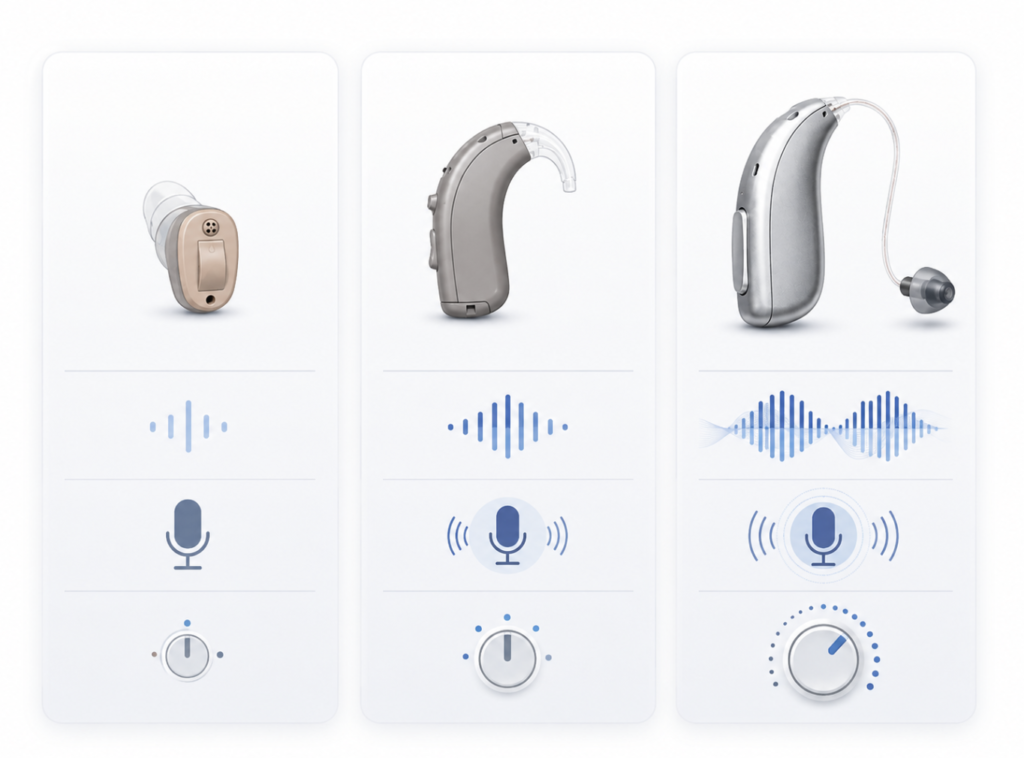
| Feature | PSAP | Basic HA | Premium HA |
|---|---|---|---|
| Frequency-specific amplification | ✗ | ✓ | ✓✓ |
| Digital noise reduction | Rarely | ✓ | ✓✓ |
| Directional microphone | ✗ | Limited | ✓ |
| Custom audiogram fitting | ✗ | ✓ | ✓✓ |
| FDA medical device regulation | ✗ | ✓ | ✓ |
| Typical cost (USD) | $30–$500 | $1,000–$2,000 | $2,000–$6,000 |
The most clinically relevant technical gap is in noise handling. Most PSAPs lack directional microphones and digital noise suppression — features that become critical when following a conversation at a dinner table or in a meeting room. This hardware difference has a direct and measurable effect on performance in real-world listening conditions.
PSAP vs Hearing Aid: What the Clinical Research Shows
A Meta-Analysis: No Significant Difference Overall
The most comprehensive head-to-head comparison to date is a 2022 systematic review and meta-analysis by Chen et al., published in EClinicalMedicine (a Lancet journal). Analyzing five studies involving 124 participants, the authors found no statistically significant differences between PSAPs and conventional hearing aids across three primary outcomes: speech intelligibility (SMD 0.14; 95% CI −0.19 to 0.47; p = .41), sound quality, and listening effort [Chen, Comparison of personal sound amplification products and conventional hearing aids for patients with hearing loss, 2022]. Sensitivity analyses excluding patients with moderately severe hearing loss confirmed the same pattern. The authors concluded that PSAPs are “potentially beneficial” as alternatives to conventional hearing aids — with the caveat that variability across PSAP products must be taken into account.
Premium vs. Basic: Not All PSAPs Are Equal
A 2024 systematic review by Maidment et al. in the International Journal of Audiology drew a distinction that earlier analyses had not fully explored: the quality tier of the PSAP matters significantly [Maidment, What’s in a name? A systematic review and meta-analysis to assess the effectiveness of non-medical amplification devices in adults with mild and moderate hearing losses, 2024]. Analyzing 10 PSAP studies and 4 smartphone amplification app studies, the authors found that premium PSAPs improved speech intelligibility in noise compared to unaided listening. Basic PSAPs, however, produced no statistically significant improvement over unaided listening. Premium hearing aids still outperformed premium PSAPs overall — but the gap narrowed substantially for mild-to-moderate hearing loss when a higher-quality PSAP was used. The $30 option and the $400 option are not clinically interchangeable.
The Environment Makes the Difference
A prospective study by Choi et al. from Samsung Medical Center tested a PSAP against a basic hearing aid in 19 adults with mild-to-moderate sensorineural hearing loss, measuring performance separately in quiet and noisy conditions [Choi, A Personal Sound Amplification Product Compared to a Basic Hearing Aid for Speech Intelligibility in Adults with Mild-to-Moderate Sensorineural Hearing Loss, 2020].
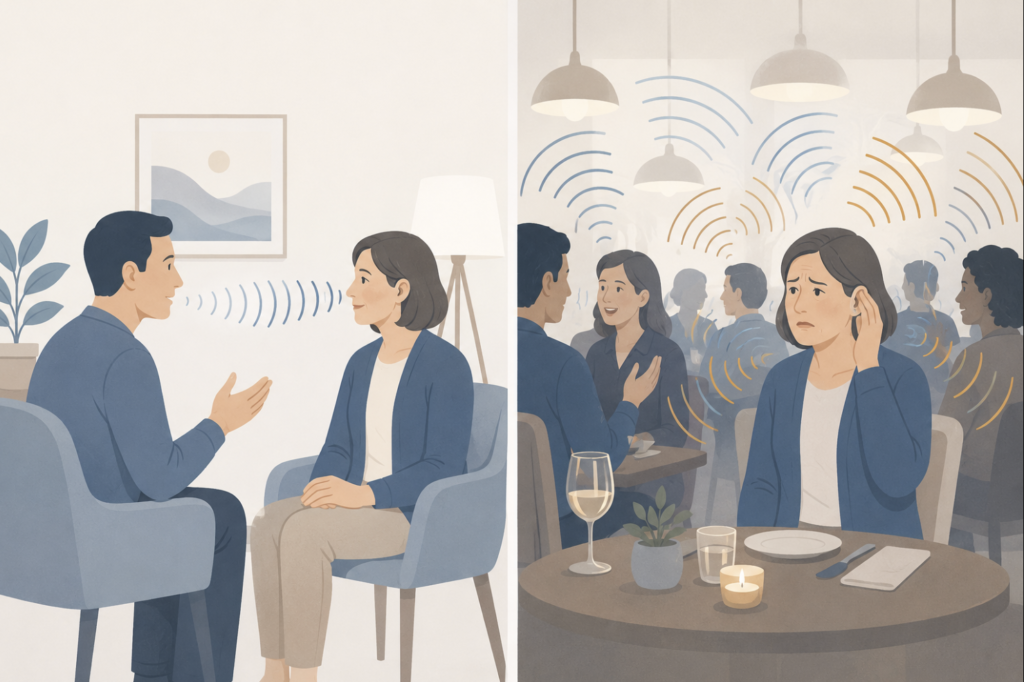
In a quiet environment, the PSAP produced a statistically significant improvement in speech intelligibility compared to the unaided condition (p < 0.001), with performance comparable to — and in some measures slightly exceeding — the basic hearing aid. In a noisy environment, however, the PSAP showed no statistically significant improvement (p = 0.160), while the hearing aid maintained its advantage. There was no significant difference in reported speech quality or device preference between the two conditions. This performance divergence aligns with the technical limitations of most PSAPs in noise processing. Note that this study involved 19 participants at a single institution; findings should be interpreted in the context of its sample size.
A Note on Service Models and Hearing Aids
A 2025 randomized clinical trial by Wu et al. in JAMA Otolaryngology–Head & Neck Surgery compared hearing aid service delivery models — not PSAPs directly — and offers an indirect but relevant data point on how access and support structure affect outcomes [Wu, Hearing Aid Service Models, Technology, and Patient Outcomes: A Randomized Clinical Trial, 2025].
Among 245 participants with mild-to-moderate hearing loss, three models were compared: audiologist-fitted prescription hearing aids, self-fitted OTC hearing aids (OTC), and OTC with limited professional support (OTC+). Audiologist-fitted hearing aids yielded statistically significantly better outcomes than both OTC models. OTC+ did not outperform standard OTC — the two produced equivalent results, indicating that limited professional support alone does not meaningfully improve upon self-fitting. Notably, measurement method mattered: ecological momentary assessment (EMA) captured a different outcome pattern than conventional lab-based testing, a finding that highlights the importance of real-world measurement in evaluating hearing device performance.
Limitations of PSAPs Worth Knowing
PSAPs amplify all frequencies uniformly. For a person whose hearing loss disproportionately affects high-frequency sounds — the most common pattern in age-related hearing loss — uniform amplification will over-amplify low frequencies while underperforming in the ranges most important for speech clarity. Because FDA safety and efficacy review is not required for PSAPs, product quality varies considerably between brands and price points. A user who perceives that a PSAP is not working adequately may increase the volume, raising concerns about prolonged exposure to overamplified sound [European Association of Hearing Aid Professionals & European Federation of Hard of Hearing People, Joint Report on Personal Sound Amplification Products, 2015]. Additionally, PSAPs do not screen for the underlying cause of hearing difficulty, which may include treatable conditions such as conductive hearing loss, sudden sensorineural hearing loss, or retrocochlear pathology.
Key Takeaways
- PSAPs and conventional hearing aids show no statistically significant difference in speech intelligibility, sound quality, or listening effort for mild-to-moderate hearing loss overall.
- Premium PSAPs meaningfully outperform basic PSAPs: premium models can be effective for mild-to-moderate hearing loss, while basic PSAPs show no significant benefit over unaided listening.
- Environment is the critical variable: PSAPs perform comparably to hearing aids in quiet settings but fall significantly short in noisy environments.
- PSAPs are not FDA-regulated for safety or efficacy; quality varies considerably across products.
- In a hearing aid service model trial (not a PSAP comparison), audiologist-fitted hearing aids outperformed OTC models; adding limited professional support to OTC (OTC+) did not improve outcomes beyond standard OTC self-fitting.
FAQ
Are PSAPs FDA-approved?
No. PSAPs are classified as consumer electronics, not medical devices, and are not subject to FDA safety or efficacy review before sale. This is distinct from both prescription hearing aids and OTC hearing aids, both of which are regulated as FDA medical devices.
Can a PSAP replace a hearing aid for mild hearing loss?
For quiet listening environments, clinical data suggest premium PSAPs can match the speech intelligibility of basic hearing aids in adults with mild-to-moderate hearing loss. In noisy environments, hearing aids — particularly premium models with directional microphones — consistently outperform PSAPs across multiple studies.
What is the difference between a PSAP and an OTC hearing aid?
OTC hearing aids are FDA-regulated Class II medical devices intended for adults with perceived mild-to-moderate hearing loss, available without a prescription since 2022. PSAPs remain unregulated consumer electronics not intended to treat hearing impairment.
Which performs better for speech in noise — a PSAP or a hearing aid?
Hearing aids, especially premium models with digital noise reduction and directional microphones, outperform PSAPs in noisy environments. This finding is consistent across multiple clinical studies, including the Choi et al. (2020) and Maidment et al. (2024) analyses.
Joonpyo Hong, MD is a board-certified otolaryngologist practicing in Korea. This article reflects his clinical interpretation of published research and does not constitute individual medical advice.
References
- Chen CH, Huang CY, Cheng HL, Lin HH, Chu YC, Chang CY, Lai YH, Wang MC, Cheng YF. Comparison of personal sound amplification products and conventional hearing aids for patients with hearing loss: A systematic review with meta-analysis. EClinicalMedicine. 2022 Apr 7;46:101378.
- Choi JE, Kim J, Yoon SH, Hong SH, Moon IJ. A personal sound amplification product compared to a basic hearing aid for speech intelligibility in adults with mild-to-moderate sensorineural hearing loss. J Audiol Otol. 2020 Apr;24(2):91-98.
- Maidment DW. What’s in a name? A systematic review and meta-analysis to assess the effectiveness of non-medical amplification devices in adults with mild and moderate hearing losses. Int J Audiol. 2024.
- Wu YH, Stangl E, Branscome K, Oleson J, Ricketts T. Hearing aid service models, technology, and patient outcomes: a randomized clinical trial. JAMA Otolaryngol Head Neck Surg. 2025 May 15;151(7):684-692.
- World Health Organization. World Report on Hearing. Geneva: WHO; 2021.
- European Association of Hearing Aid Professionals (AEA); European Federation of Hard of Hearing People (EFHOH). Joint Report on Personal Sound Amplification Products (PSAPs). 2015.
For more interesting contents:
https://curiousmd.com/ai-hearing-aids-2026-ent-review/
https://curiousmd.com/brain-controlled-hearing-aid-2026/
https://curiousmd.com/airpods-hearing-test-what-it-can-and-cannot-do/
Link out to:
https://www.fda.gov/consumers/consumer-updates/hearing-aids-and-personal-sound-amplification-products-what-know
https://www.nidcd.nih.gov/health/over-counter-hearing-aids
https://www.who.int/publications/i/item/9789240020481