
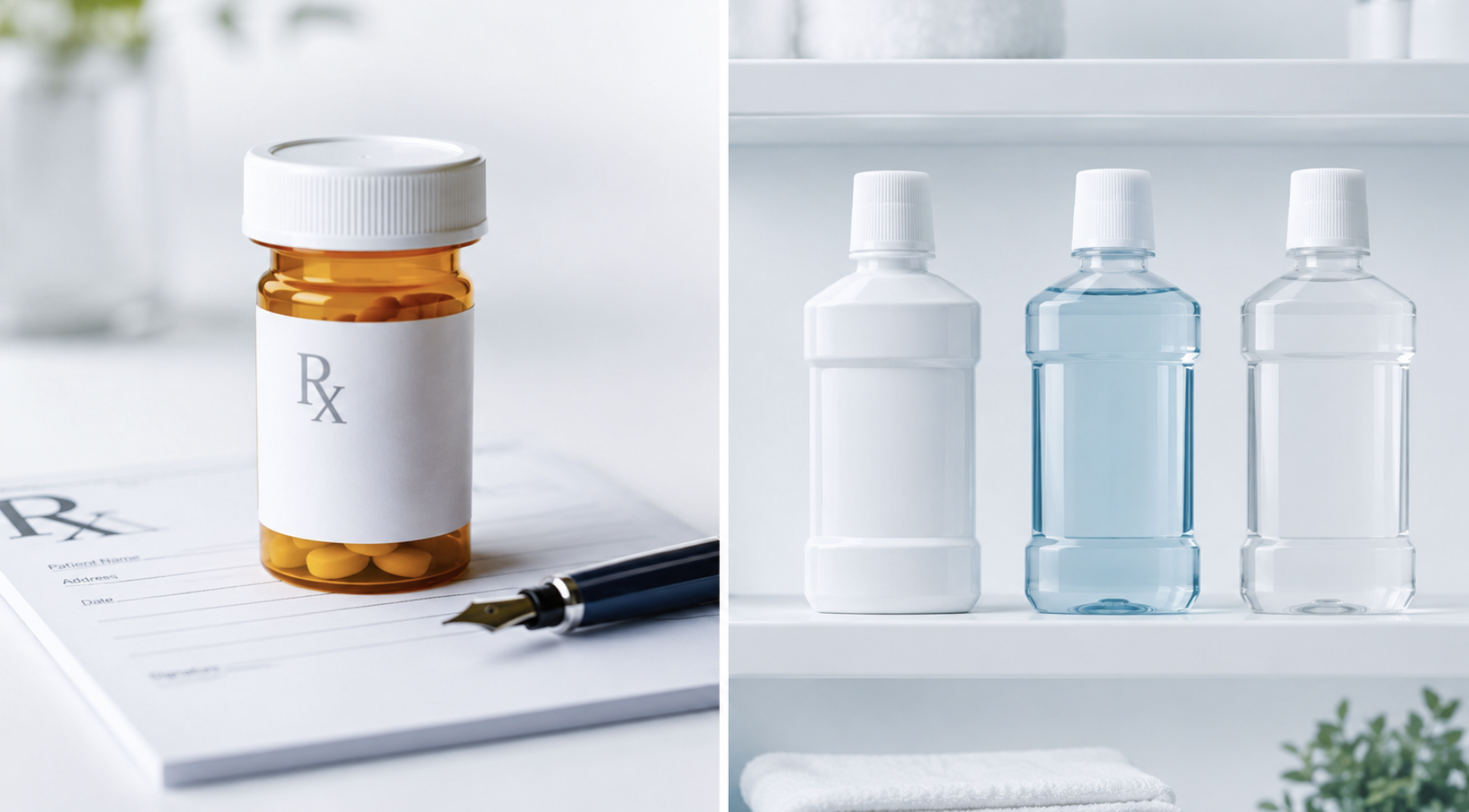
A patient leaves an ENT clinic with a prescription for benzydamine gargle, stops at the pharmacy, and faces a wall of Listerine, Crest, and a dozen other rinses available without a prescription. The question that follows is one every ENT physician encounters: Prescription vs Over-the-Counter Mouthwash, which is better?
The honest answer surprises most patients. The difference between prescription and over-the-counter mouthwash is not really about strength or quality. It is about purpose — and the reasons clinicians prescribe gargles go well beyond the chemistry of what is in the bottle.
What Gargling Actually Does
Before splitting hairs over ingredients, it helps to know what every gargle has in common.
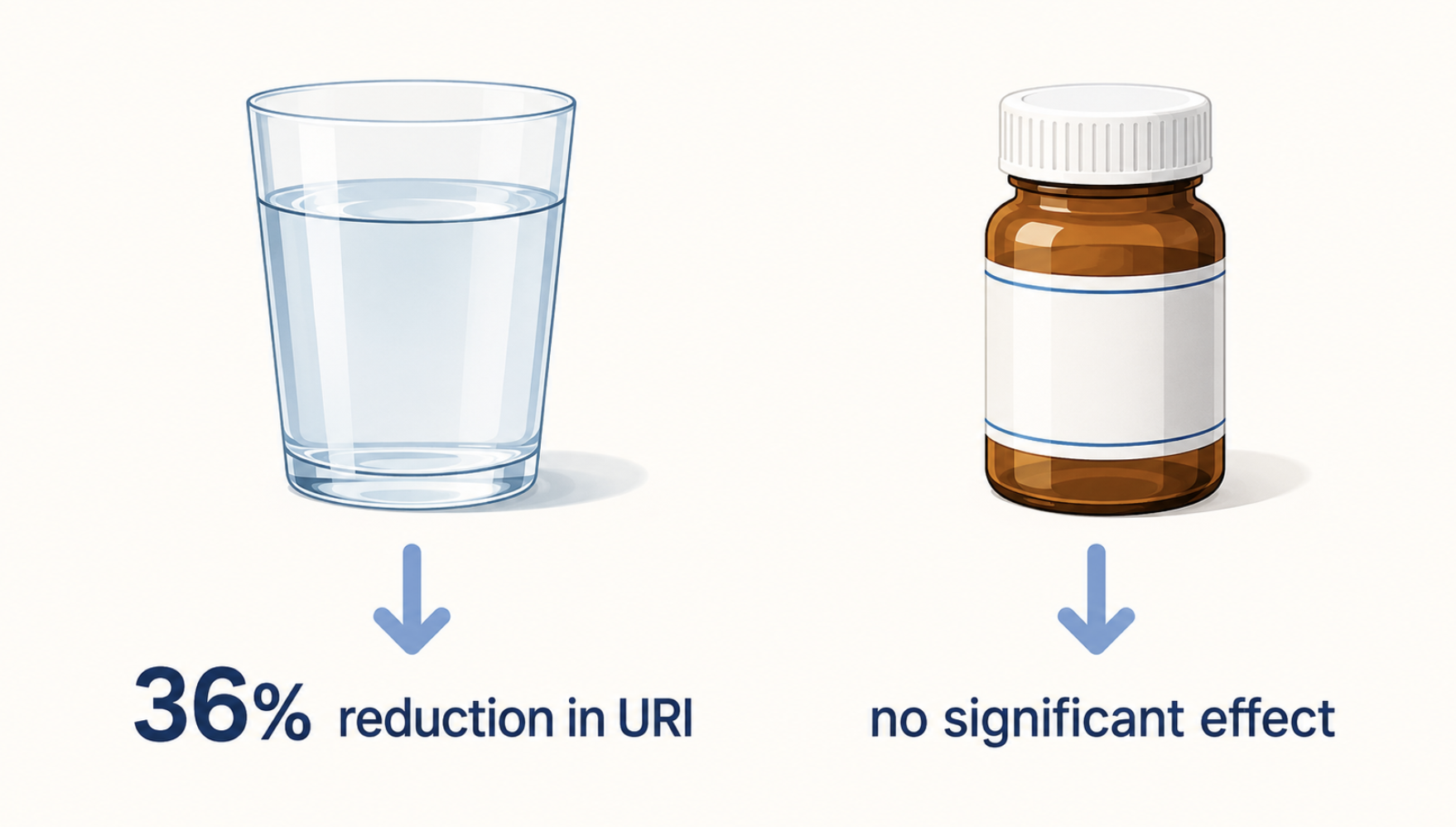
The most underrated mechanism of any mouthwash is simply physical washout. Swishing liquid through the oropharynx removes viral particles, bacteria, mucus, and antigens. This is not a small effect. A Japanese randomized trial of 387 healthy adults found that plain water gargling three times daily reduced upper respiratory tract infections by 36% over a 60-day winter season [Satomura, Prevention of upper respiratory tract infections by gargling: a randomized trial, 2005]. Plain water. No active ingredient. Just mechanical clearance.
Active ingredients add specific actions on top of this baseline. Anti-inflammatory agents like benzydamine and diclofenac calm inflamed mucosa. Antiseptics like chlorhexidine and povidone-iodine kill microorganisms. Essential oils and cetylpyridinium chloride disrupt bacterial biofilm. Each ingredient targets a different problem, which is why “the best mouthwash” is the wrong question. The right question is: best for what?
Prescription Mouthwashes Explained
Benzydamine (Tantum) — The Sore Throat Specialist
If you’ve ever been prescribed a gargle for a painful throat, it was probably benzydamine. This is a topical non-steroidal anti-inflammatory drug at 0.15% concentration, and it does something no over-the-counter mouthwash does: it actively reduces pharyngeal inflammation and produces a mild local anesthetic effect.
The evidence base is solid. The MASCC/ISOO international guideline group gave benzydamine a Level I recommendation for preventing oral mucositis in head and neck cancer patients receiving radiation therapy [Lalla, MASCC/ISOO clinical practice guidelines for the management of mucositis, 2014]. While antibiotics remain the primary treatment for streptococcal tonsillopharyngitis, a multicenter randomized trial showed that adding benzydamine and chlorhexidine spray to penicillin significantly reduced the intensity of clinical signs compared to penicillin alone [Cingi, Effect of chlorhexidine gluconate and benzydamine hydrochloride mouth spray on clinical signs in streptococcal tonsillopharyngitis, 2011].
Diclofenac Mouthwash — A Stronger Anti-Inflammatory Option
Less commonly seen but equally legitimate, diclofenac at 0.074% is another topical NSAID gargle. A phase III randomized trial demonstrated that diclofenac epolamine mouthwash was at least as effective as conventional diclofenac mouthwash for relieving pain and inflammation in patients with painful inflammatory conditions of the oral cavity [Serafini, Therapeutic efficacy and tolerability of the topical treatment of inflammatory conditions of the oral cavity with a mouthwash containing diclofenac epolamine, 2012]. Its appeal is purely local action — patients get NSAID benefit at the throat without the systemic GI and cardiovascular risks of oral diclofenac.
Chlorhexidine (Hexamedine, Peridex) — The Antiseptic Standard
Chlorhexidine 0.12% to 0.2% has been the antiseptic gold standard in dentistry for decades. It binds to oral surfaces and continues killing bacteria for hours after rinsing — a property called substantivity. For gingivitis, periodontal disease, and post-surgical oral wounds, nothing in the over-the-counter aisle quite matches it.
The catch: chlorhexidine cannot be used long-term. Beyond two weeks, it causes tooth staining, taste alteration, and mucosal desquamation in many users. Prescription packaging exists partly to enforce this time limit. A 2025 systematic review confirmed that chlorhexidine outperforms cetylpyridinium chloride mouthwash when used without brushing, but the staining drawback persists [Windhorst, The Effect of Cetylpyridinium Chloride Compared to Chlorhexidine Mouthwash on Scores of Plaque and Gingivitis, 2025].
Povidone-Iodine — The Broad-Spectrum Option
Povidone-iodine gargle and spray cover bacteria, viruses, and fungi simultaneously. For acute pharyngitis, post-operative oral care, and short-term infection control, it’s a reasonable choice. A randomized trial in head and neck cancer patients found 0.1% povidone-iodine reduced severe radiation-induced oral mucositis from 51% to 26% compared to benzydamine [Kannarunimit, A prospective randomized study comparing the efficacy between povidone-iodine gargling and benzydamine hydrochloride for mucositis prevention, 2023]. Like chlorhexidine, however, povidone-iodine shouldn’t be used beyond about two weeks because of iodine absorption and potential thyroid effects.
Over-the-Counter Mouthwashes Explained
Listerine — The Most-Researched OTC Option
Listerine’s blend of thymol, eucalyptol, menthol, and methyl salicylate is among the most extensively studied OTC mouthwash formulations on the market. A landmark 6-month randomized trial demonstrated comparable antiplaque and antigingivitis effectiveness between essential oil mouthrinse and 0.12% chlorhexidine, with the essential oil formula avoiding the staining issues associated with long-term chlorhexidine use [Charles, Comparative antiplaque and antigingivitis effectiveness of a chlorhexidine and an essential oil mouthrinse: 6-month clinical trial, 2004]. The trade-off is favorable for daily use: no staining, no taste alteration, no two-week limit.
CPC-Based Products (Garglin, Crest Pro-Health)
Cetylpyridinium chloride is a quaternary ammonium antiseptic. When combined with regular brushing, recent meta-analytic data show CPC mouthwash matches chlorhexidine for plaque control [Windhorst, The Effect of Cetylpyridinium Chloride Compared to Chlorhexidine Mouthwash, 2025]. Used without brushing, CPC underperforms — a useful detail for patients who treat mouthwash as a substitute for hygiene rather than an adjunct.
TheraBreath and Other Halitosis Products
A category worth flagging because it confuses patients. TheraBreath and similar zinc or oxygenating rinses are designed specifically to neutralize volatile sulfur compounds — the molecules that produce bad breath. They are not antibacterial in the same sense as Listerine or chlorhexidine. For genuine periodontal or pharyngeal pathology, they have limited evidence.
Prescription vs Over-the-Counter Mouthwash: A Side-by-Side Comparison
| Product | Type | Active Ingredient | Best For | Duration |
|---|---|---|---|---|
| Benzydamine (Tantum) | Prescription | Benzydamine 0.15% | Sore throat pain | 5–7 days (acute) / Weeks (mucositis) |
| Diclofenac rinse | Prescription | Diclofenac 0.074% | Pharyngitis | 5–7 days |
| Chlorhexidine | Prescription | Chlorhexidine 0.12% | Gingivitis, post-op | ≤2 weeks |
| Povidone-iodine | OTC/Rx | Povidone-iodine | Acute infection | ≤2 weeks |
| Listerine | OTC | Essential oils | Daily prevention | Long-term |
| CPC products | OTC | Cetylpyridinium chloride | Daily care, breath | Long-term |
| TheraBreath | OTC | Zinc, oxygenating | Halitosis only | Long-term |
The Surprising Evidence on Prevention
Here is where the story turns counterintuitive.
In the same Satomura trial that established water gargling’s 36% protective effect, a third arm received povidone-iodine gargle three times daily. The povidone group showed no statistically significant prevention benefit compared to the no-gargle control [Satomura, Prevention of upper respiratory tract infections by gargling, 2005]. Plain water showed a more consistent preventive effect than the antiseptic in this specific setting.
The ELVIS pilot trial from Edinburgh reinforced the point. Adults with early common cold symptoms who gargled and nasally irrigated with hypertonic saline shortened their illness by an average of 1.9 days, reduced over-the-counter medication use by 36%, and cut household transmission by 35% [Ramalingam, A pilot, open labelled, randomised controlled trial of hypertonic saline nasal irrigation and gargling for the common cold, 2019]. The proposed mechanism is elegant: chloride ions enter epithelial cells and convert to hypochlorous acid, boosting the cell’s intrinsic antiviral defense.
The implication is uncomfortable for the gargle industry. For prevention and even early-illness duration, the cheapest possible intervention — saltwater — appears to outperform the expensive prescription options. Medicated gargles likely disturb the normal oral flora that contributes to mucosal defense, and their cellular toxicity may slow epithelial recovery.
Clinical Perspective: Why ENT Physicians Still Prescribe Mouthwash
If water works for prevention, why do clinicians keep writing prescriptions?
The honest answer involves several layers.
Symptom relief is real, even when disease modification is modest. A patient with acute pharyngitis is not asking to shorten the illness by half a day. They want relief from the pain that interferes with swallowing. Benzydamine genuinely reduces that pain. The Cambridge tonsillopharyngitis trial demonstrated this objectively [Cingi, Effect of chlorhexidine gluconate and benzydamine hydrochloride mouth spray on clinical signs, 2011].
Gargles serve as a non-antibiotic alternative. Most sore throats are viral, and antibiotics are inappropriate. But patients who leave with nothing tangible often feel dismissed, and global surveys confirm that over 80% of sore throat sufferers seek medical advice expecting some form of treatment [van der Velden, Patients with Sore Throat: A Survey of Self-Management and Healthcare-Seeking Behavior in 13 Countries, 2020]. A prescribed gargle satisfies that expectation while protecting against unnecessary antibiotic use — a small win for antimicrobial stewardship.
Patient expectations measurably shift prescribing. A controlled experiment in Health Psychology showed that physicians prescribed antibiotics significantly more often when patients communicated high expectations [Sirota, Expectations for antibiotics increase their prescribing: Causal evidence about localized impact, 2017]. The same dynamic applies to gargle prescribing, and most clinicians would rather meet the expectation with a benign topical agent than an inappropriate systemic drug.
The harm profile is genuinely low. Topical gargles produce minimal systemic absorption. For elderly patients on polypharmacy, pregnant women, and children, this is not a trivial advantage.
There is also an honest placebo dimension. Acute viral pharyngitis has a high spontaneous recovery rate and a large placebo response component. The ritual of being prescribed something, then actively gargling several times a day, contributes to the perception — and possibly the reality — of faster recovery. Active placebos with mild pharmacology and minimal harm have long been part of legitimate medicine.

When clinicians prescribe benzydamine, the science is not overwhelming. The choice is a low-harm intervention with documented symptom-relief benefit, satisfying a reasonable patient expectation, and steering the encounter away from antibiotic overuse. That is defensible practice, even when the evidence for cure is modest.
Key Takeaways
- Prescription mouthwash treats specific conditions; over-the-counter mouthwash supports daily hygiene — they are not interchangeable.
- For acute sore throat pain, benzydamine and diclofenac rinses offer anti-inflammatory action that no over-the-counter mouthwash provides.
- Chlorhexidine remains the antiseptic gold standard but should be limited to two weeks because of staining and taste alteration.
- A randomized trial found plain water gargling reduced upper respiratory infections by 36%, while medicated povidone-iodine showed no significant preventive effect.
- Doctors prescribe mouthwash for legitimate reasons: symptom relief, antibiotic stewardship, meeting patient expectations, and a favorable harm profile — not just out of habit.
FAQ
Is prescription mouthwash actually better than Listerine?
It depends on the goal. Prescription chlorhexidine outperforms Listerine for treating gingivitis or post-surgical infection control, and prescription anti-inflammatory gargles like benzydamine address sore throat pain in a way no over-the-counter rinse can. For long-term daily oral hygiene, however, Listerine has more clinical research than almost any other product on the market.
Can I use Listerine instead of my prescribed mouthwash?
For the specific condition you were prescribed for, generally no. Benzydamine targets inflammation; Listerine targets bacteria. They are different treatments for different problems. For general mouth care between illness episodes, Listerine is appropriate.
Does gargling really prevent colds?
Yes, but the most effective gargle is the simplest. A randomized trial of 387 adults found water gargling three times daily reduced upper respiratory infections by 36%, while povidone-iodine gargling showed no significant preventive effect [Satomura, 2005].
How long can I use chlorhexidine mouthwash?
Most guidelines limit chlorhexidine to two weeks. Longer use risks tooth staining, taste changes, and mucosal irritation. If your provider recommends extended use, follow that direct guidance.
Why did my ENT prescribe mouthwash for a viral sore throat?
Because viral infections don’t need antibiotics, but symptom relief still matters. Anti-inflammatory gargles like benzydamine reduce pain and inflammation locally, addressing what you actually feel without inappropriate antibiotic use.
References
- Satomura K, Kitamura T, Kawamura T, Shimbo T, Watanabe M, Kamei M, Takano Y, Tamakoshi A. Prevention of upper respiratory tract infections by gargling: a randomized trial. Am J Prev Med. 2005;29(4):302-307.
- Ramalingam S, Graham C, Dove J, Morrice L, Sheikh A. A pilot, open labelled, randomised controlled trial of hypertonic saline nasal irrigation and gargling for the common cold. Sci Rep. 2019;9:1015.
- Cingi C, Songu M, Ural A, Yildirim M, Erdogmus N, Bal C. Effect of chlorhexidine gluconate and benzydamine hydrochloride mouth spray on clinical signs and quality of life of patients with streptococcal tonsillopharyngitis: multicentre, prospective, randomised, double-blinded, placebo-controlled study. J Laryngol Otol. 2011;125(6):620-625.
- Sirota M, Round T, Samaranayaka S, Kostopoulou O. Expectations for antibiotics increase their prescribing: Causal evidence about localized impact. Health Psychol. 2017;36(4):402-409.
- Windhorst ER, Joosstens M, van der Sluijs E, Slot DE. The Effect of Cetylpyridinium Chloride Compared to Chlorhexidine Mouthwash on Scores of Plaque and Gingivitis: A Systematic Review and Meta-Analyses. Int J Dent Hyg. 2025;23(4):665-681.
- Lalla RV, Bowen J, Barasch A, Elting L, Epstein J, Keefe DM, McGuire DB, Migliorati C, Nicolatou-Galitis O, Peterson DE, Raber-Durlacher JE, Sonis ST, Elad S. MASCC/ISOO clinical practice guidelines for the management of mucositis secondary to cancer therapy. Cancer. 2014;120(10):1453-1461.
- Kannarunimit D, Chotirut A, Prayongrat A, Pakvisal N, Sitthideatphaiboon P, Lertbutsayanukul C, Kitpanit S, Chakkabat C, Vinayanuwattikun C. A prospective randomized study comparing the efficacy between povidone-iodine gargling and benzydamine hydrochloride for mucositis prevention in head and neck cancer patients receiving concurrent chemoradiotherapy. Heliyon. 2023;9(4):e15437.
- Serafini G, Trevisan S, Saponati G, Bandettini B. Therapeutic efficacy and tolerability of the topical treatment of inflammatory conditions of the oral cavity with a mouthwash containing diclofenac epolamine: a randomized, investigator-blind, parallel-group, controlled, phase III study. Clin Drug Investig. 2012;32(1):41-49.
- van der Velden AW, Sessa A, Altiner A, Pignatari ACC, Shephard A. Patients with Sore Throat: A Survey of Self-Management and Healthcare-Seeking Behavior in 13 Countries Worldwide. Pragmat Obs Res. 2020;11:91-102.
- Charles CH, Mostler KM, Bartels LL, Mankodi SM. Comparative antiplaque and antigingivitis effectiveness of a chlorhexidine and an essential oil mouthrinse: 6-month clinical trial. J Clin Periodontol. 2004;31(10):878-884.
Joonpyo Hong, MD is a board-certified otolaryngologist practicing in Korea. This article reflects his clinical interpretation of published research and does not constitute individual medical advice.
For more interesting contents:
https://curiousmd.com/tonsil-stones-do-you-need-surgery/
https://curiousmd.com/leukoplakia-white-patches-cancer-risk/
https://curiousmd.com/hpv-vaccine-and-throat-cancer/
Link out to:
https://www.ajpmonline.org/article/S0749-3797(05)00258-8/abstract
https://mascc.org/resources/mascc-guidelines/
https://www.nature.com/articles/s41598-018-37703-3