
A $399 AI hearing aid from a startup barely eight years old has been climbing Amazon’s best-seller rankings and earning some of the highest marks in independent lab testing. It separates speech from background noise using a neural network, streams music and calls from a phone, and costs roughly a tenth of what a professionally fitted pair often runs. This article examines how good OTC hearing aids — the over-the-counter devices sold without a prescription — have actually become, where they still fall short, and what a clinic visit still offers that a box on a shelf cannot.
An expansion almost no one predicted
The turning point was regulatory, not technological. In October 2022, the FDA finalized a rule letting adults aged 18 and older with perceived mild to moderate hearing loss buy hearing aids directly from a store or website, without a medical exam, a prescription, or an audiologist visit (FDA, 2022). A category that essentially did not exist for consumers appeared almost overnight.
The size of the unmet need explains why this mattered so much. Hearing loss directly affects about 23% of Americans aged 12 and older, and the large majority of that is mild [Goman & Lin, “Prevalence of Hearing Loss by Severity in the US,” 2016]. In absolute terms, roughly 25 million people have mild loss and another 11 million have moderate loss — tens of millions of adults who fall squarely inside the range OTC devices are designed for.
Yet historically, fewer than one in five adults who could benefit from a hearing aid actually used one [De Sousa, “OTC self-fitting vs audiologist-fitted hearing aid RCT,” 2023]. The dominant reason was money. A professionally fitted pair has long cost roughly $4,000 to $6,000, an expense that insurance frequently does not cover, which priced out a large share of the people who needed help.
Retail moved quickly once the rule took effect. Walgreens added OTC hearing aids to more than 8,000 stores within weeks, and CVS, Walmart, and Sam’s Club followed, turning hearing aids from a specialty medical purchase into something sitting near the pharmacy counter.
Then consumer electronics arrived. In September 2024, the FDA authorized the first OTC hearing aid software — Apple’s Hearing Aid Feature for the AirPods Pro 2, a roughly $249 pair of earbuds most people already own or recognize (FDA, 2024). The authorization used the De Novo pathway for novel, lower-risk devices, and it signaled that a mainstream tech product could now legally function as a medical device. Sony, working with the hearing conglomerate WS Audiology, entered the space around the same time.
The most aggressive competition came from China. AI-focused startups such as ELEHEAR, priced at $399, along with Yeasound and Cearvol, have pushed into the top ranks of the independent HearAdvisor lab’s OTC testing, all costing under $700 (HearingTracker, 2026). That is the genuinely surprising part. These are not the cheap, one-chip amplifiers that flooded the market in the first wave — they are earning grades that approach devices costing many times more. One report even credits ELEHEAR with capturing 18% of the US OTC market in a single year, though that particular figure is a company-linked claim rather than an audited number and should be read with caution.
Market-research estimates put the US OTC segment near $165 million in 2024 and growing around 8% a year, though projections vary widely across firms (Global Market Insights, 2025). The precise number matters less than the direction: a consumer category built from almost nothing in three years, now competing on measured performance rather than price alone. For a field where treatment rates barely moved for decades, that pace is remarkable.
How good are OTC hearing aids, really?
The honest answer here is surprising. In a randomized clinical trial, adults with self-perceived mild to moderate loss who set up an OTC self-fitting hearing aid entirely on their own — using only the packaged instructions, the app, and remote support — performed about as well after six weeks as people whose identical device was fitted by an audiologist following clinical best practices, including real-ear verification [De Sousa, “OTC self-fitting vs audiologist-fitted hearing aid RCT,” 2023]. The self-fitting group even held a small early advantage at two weeks that evened out by the end. The FDA reached a similar conclusion for Apple’s software, where a 118-person study found self-fitting users achieved benefit comparable to professional fitting, with no device-related adverse events (FDA, 2024).
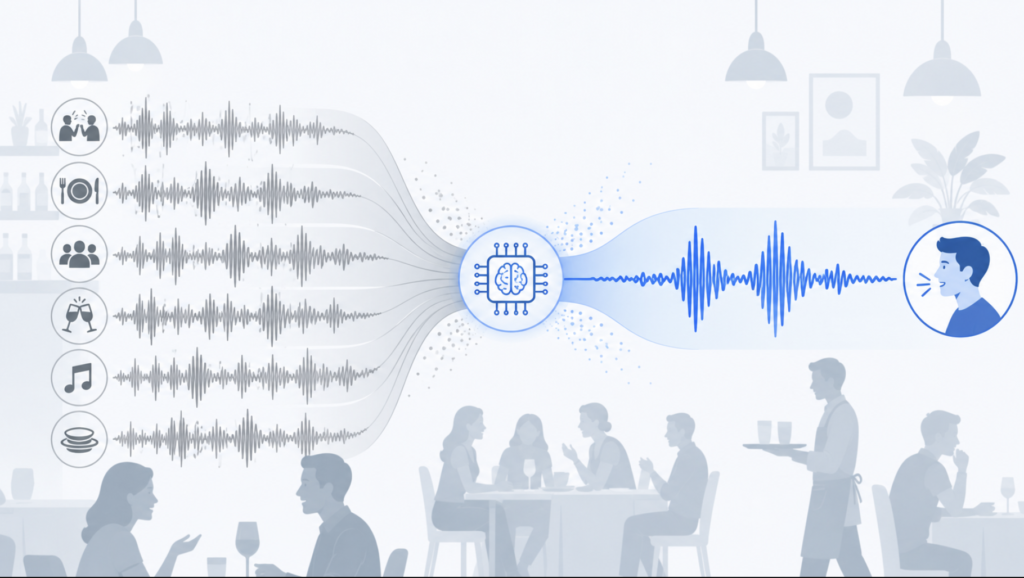
What sits inside these devices explains the result. Older hearing aids amplified sound indiscriminately, raising the volume of background clatter along with the voice you were trying to follow. Modern OTC devices use AI sound processing, increasingly running deep neural networks, to identify speech and pull it forward while holding noise back. That single shift is the difference between a device that helps in a quiet room and one that helps at a restaurant.
The feature set has widened alongside the processing. The better OTC aids now offer Bluetooth streaming for calls and media, an in-app hearing test that builds a personalized profile from your own responses to tones, tinnitus masking sounds, and even live speech translation. None of this required a clinic in the loop, which is precisely why the category grew so fast. The strongest OTC performers in independent testing now sit close to entry-level prescription devices on sound quality, a claim that would not have held three years ago.
Where the limits are still clear
The limits are just as real, and worth stating plainly rather than softening. OTC devices are cleared only for mild to moderate loss. Roughly two million Americans have severe or profound hearing loss [Goman & Lin, “Prevalence of Hearing Loss by Severity in the US,” 2016], and for them, the amplification and processing an OTC device can deliver is simply not enough. Pushing a shelf device to cover that gap tends to produce distortion and feedback, not clarity.
Self-fitting has a ceiling of its own. An app can approximate what you need from a tone test, but there is no ear examination in the box. No one is checking for a wax blockage that could be causing or worsening the problem, and nothing is screening for a medical cause that amplification would only mask. A self-directed setup works well for a straightforward loss and much less well when the underlying picture is not straightforward.
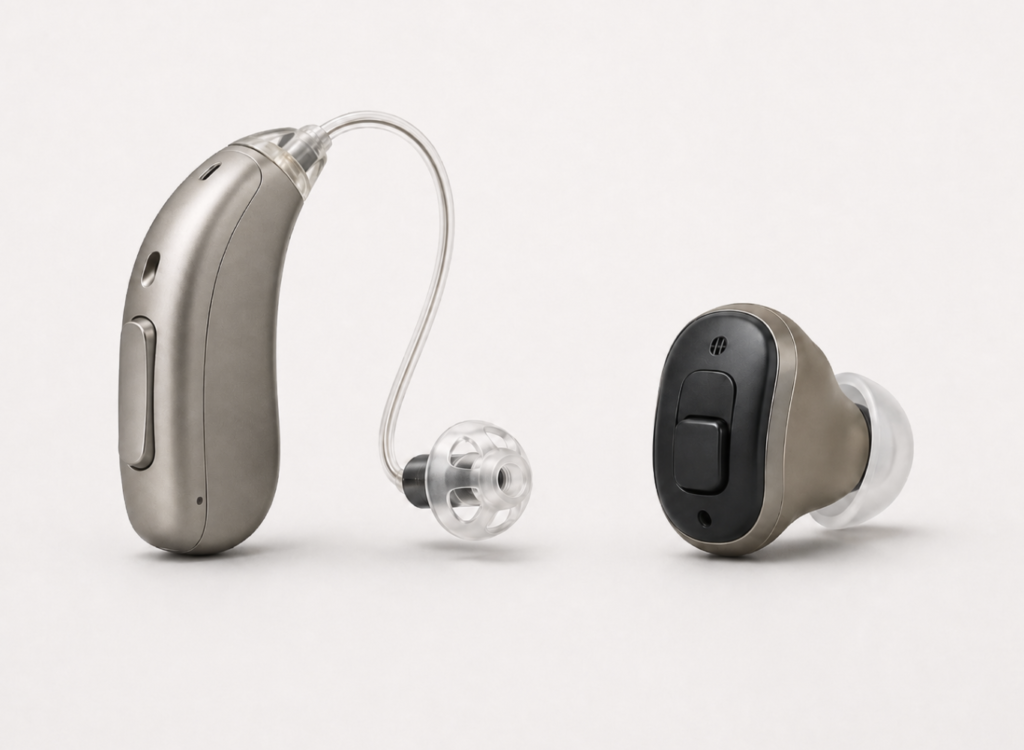
There are practical trade-offs too. Earbud-style devices such as the AirPods Pro run only about six hours on a charge, short of what someone needs to wear a device from morning to night, whereas a behind-the-ear design lasts longer but is more visible. And quality varies enormously across the category. It now includes hundreds of low-cost manufacturers, and a top lab score for one brand tells you nothing about the unbranded amplifier sitting next to it online. “OTC” describes a sales channel, not a guarantee of performance.
There is also an ear-health dimension the marketing rarely mentions. Wearing an earbud-style device that seals the canal all day can produce the occlusion effect — your own voice sounding boomy or hollow, as if you are speaking inside a barrel — which is a comfort and sound-quality issue more than a hazard, and one that open or well-vented fittings largely solve [Kiessling, “Occlusion effect of earmolds with different venting systems,” 2005].
The more medical concern is that prolonged, closed-fit wear traps heat and moisture, cuts ventilation, and can retain earwax, raising the risk of external ear canal problems. Surveys of earphone users link heavy use to otitis externa — inflammation or infection of the ear canal, sometimes called swimmer’s ear — as well as wax impaction and fungal infection, with more careful wear habits lowering the risk [Kim, “Ear Symptoms and Earphone Usage,” 2025; Ghosh Moulic, “External Auditory Canal Health Among Earphone Users,” 2024]. A behind-the-ear device with an open dome sidesteps much of this; an all-day sealed earbud does not.
Why the trajectory is genuinely exciting
Even with those caveats, the direction is hard not to find encouraging, and the reasons go beyond price. Cost has fallen from the $4,000 to $6,000 range for a fitted pair down to somewhere between $249 and $599, which changes who can even consider treatment in the first place.
The most underrated advantage is procedural. With an OTC device, a patient buys it and starts using it — that is the entire process. Compare that with the traditional path: book an appointment, get assessed by an audiologist, choose a device type suited to your loss and anatomy, have it physically fitted, undergo real-ear measurement to confirm the output matches your prescription, and then return for follow-up adjustments over the following weeks.
Every one of those steps is medically meaningful. But from the patient’s side it is a long, multi-visit commitment, and that friction is a large part of why so many people delayed for years or never started at all. Removing the friction is not a minor convenience — it changes who acts, and when. (Those same steps also carry real clinical value, which is the tension the next section returns to.)
The pace of convergence adds to the optimism. Advances in low-power semiconductors, AI sound processing, and mature earbud hardware are compounding on one another quickly. Big Tech is now in the room, which pulls attention and engineering talent toward hearing that the field never had before. Just as telling, the incumbents are responding rather than retreating: established manufacturers such as Sonova, Starkey, and Eargo are building their own self-fitting or OTC-style options, and tele-audiology is turning professional support into something that can be delivered remotely rather than only in a clinic. Whatever these devices can do today is the floor of the category, not the ceiling.
What a clinic still does that a box can’t — for now
That said, a clinic visit still does several things a shelf device cannot, and those functions are why a box alone is not always the right answer.
The first is precise, verified fitting for complex hearing. A steep or unusual audiogram needs the device’s output matched to a prescriptive target across frequencies and then confirmed with real-ear measurement — a probe microphone in the ear canal checking what the device is actually delivering to the eardrum, not just what the software assumes. This is not audiologist ceremony. When fittings drift from prescriptive targets, measured outcomes get worse; in children fitted outside target, speech recognition was poorer than in those matched within a few decibels [McCreery, “Deviations from Hearing Aid Prescription in Children,” 2017]. A self-fitting app cannot yet replicate that verification loop for a difficult ear.
The second, and arguably the most important, is medical screening. Hearing loss that comes on suddenly, affects only one ear, shows a large difference between the two ears, or arrives with pain or drainage is not a candidate for a consumer amplifier — it is a signal that needs a physician.
Sudden sensorineural hearing loss is a genuine emergency: it accounts for roughly 66,000 new cases a year in the United States, and prompt evaluation and treatment can meaningfully improve the odds of recovery, while the workup also has to distinguish it from conductive loss and rule out a retrocochlear cause such as a tumor [Chandrasekhar, “Clinical Practice Guideline: Sudden Hearing Loss,” 2019]. No app on the market screens for any of that. Something as ordinary as impacted earwax can also masquerade as hearing loss, and a shelf device will neither detect it nor remove it.
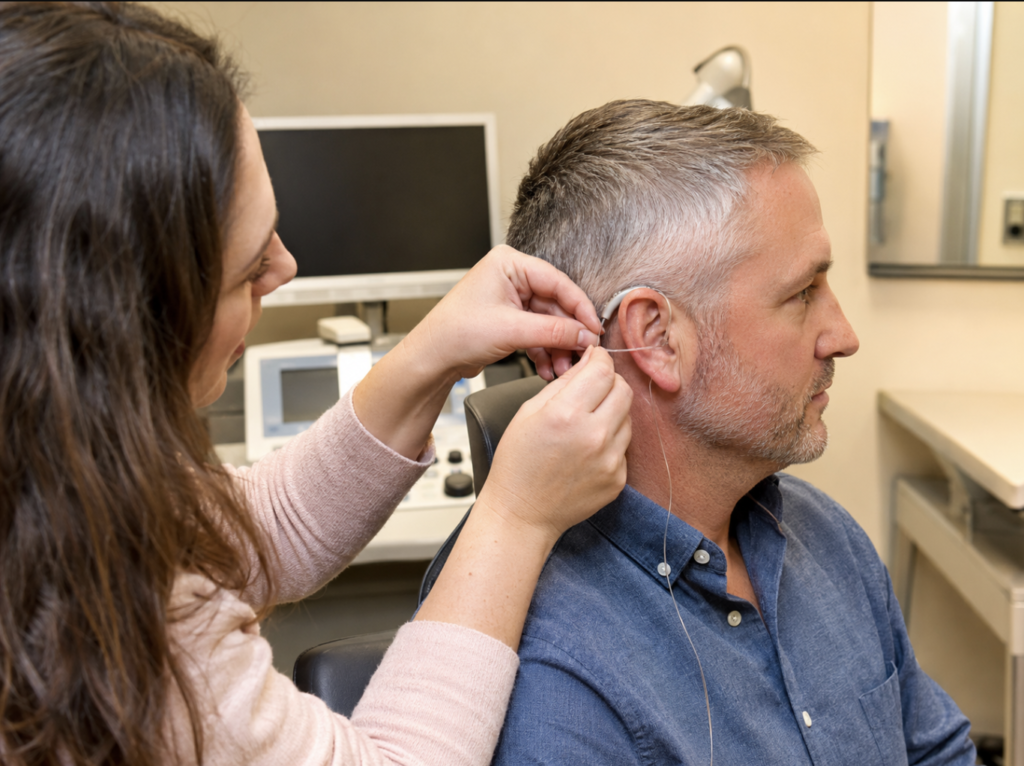
The third is the set of populations a box does not serve well. Children need verified pediatric fitting targets and custom earmolds as their ears grow, and the fitting evidence is clearest exactly here [McCreery, “Deviations from Hearing Aid Prescription in Children,” 2017]. Anyone requiring ongoing rehabilitation, counseling, and periodic readjustment benefits from a professional relationship that a one-time purchase does not provide.
The “for now” framing is deliberate. Self-fitting keeps improving, remote verification is advancing, and some of this gap will narrow over the next several years. But medical screening in particular is not going away soon, because deciding whether a symptom is benign or dangerous is a clinical judgment, not an amplification setting.
Clinical Perspective
On balance, the OTC wave is a net good. The hardest problem in hearing care has always been getting people to act at all, and to act sooner rather than after years of decline — and cheaper, lower-friction devices help close that gap in a way clinics never could on their own. The one real caution is the missing screening step: a device on a shelf cannot tell you whether your hearing loss has a treatable or serious medical cause. A reasonable rule of thumb: if your loss is mild, gradual, and roughly equal in both ears, an OTC device is a sensible first try; if it is sudden, one-sided, or comes with pain, see a professional before buying anything.
There is also a bigger reason to treat hearing loss at all, and it deserves an honest accounting. Hearing loss is independently linked to a higher risk of falls in older adults [Lin & Ferrucci, “Hearing loss and falls among older adults,” 2012] and is named among the largest potentially modifiable risk factors for dementia [Livingston, “Dementia prevention, intervention, and care” (Lancet Commission), 2024]. That association is strong. What is not yet settled is whether treating hearing loss slows cognitive decline: the flagship randomized trial found no overall benefit across its whole cohort, with a possible benefit only in older adults already at higher risk [Lin, “Hearing intervention vs health education control (ACHIEVE),” 2023]. The takeaway: treat hearing loss because hearing itself matters — for safety, connection, and quality of life — and hold the dementia question as a real but still-open one.
Key Takeaways
- The FDA’s October 2022 rule created the OTC hearing aid category, and prices have since fallen from $4,000–$6,000 a pair to as low as $249, addressing the cost barrier that kept most people from treatment.
- About 23% of Americans aged 12 and older have hearing loss, and the majority is mild — the exact range OTC devices are designed to serve.
- In a randomized trial, self-fitting OTC hearing aids matched audiologist-fitted devices after six weeks for mild to moderate loss, and the FDA found the same for Apple’s AirPods Pro feature.
- OTC devices are cleared only for mild to moderate loss; the roughly two million Americans with severe or profound loss still need prescription aids, and no app screens for medical red flags.
- A clinic still uniquely provides verified fitting for complex hearing, medical screening for treatable or dangerous causes, and care for children — with sudden hearing loss being a true emergency that needs prompt professional evaluation.
FAQ
Are OTC hearing aids as good as prescription ones? For mild to moderate hearing loss, the best ones can come close. A randomized trial found self-fitting OTC devices performed comparably to audiologist-fitted aids at six weeks [De Sousa, 2023]. But results vary widely by brand, and prescription care still wins for complex losses that need output matched and verified to a prescriptive target.
When do you need a prescription hearing aid instead of OTC? When your loss is severe or profound, when it comes on suddenly, when it affects only one ear or is clearly worse on one side, or when it arrives with pain or drainage. These situations call for a professional evaluation, both to fit the device accurately and to rule out a medical cause an app cannot detect.
Can OTC hearing aids treat severe hearing loss? No. OTC devices are FDA-cleared only for adults aged 18 and older with perceived mild to moderate hearing loss. If sounds are severely muffled or you struggle even in a quiet one-on-one conversation, you likely need a prescription device fitted by a hearing professional.
Do OTC hearing aids help with tinnitus? Many include tinnitus masking — background sounds meant to make the ringing less noticeable — and some people find it useful. This is comfort management, not a cure, and persistent or one-sided tinnitus, especially with hearing loss, is worth having evaluated by a clinician.
Should I see a doctor before buying an OTC hearing aid? Not always, but sometimes. If your loss is gradual and symmetric, trying an OTC device first is reasonable. If it is sudden, one-sided, or accompanied by pain, dizziness, or drainage, see a professional first — sudden hearing loss in particular is treated as an emergency because early care improves the odds of recovery.
Will OTC devices replace audiologists? Unlikely, though they will change the role. Simple, low-risk fittings are shifting toward self-fitting and remote support, while professionals concentrate on complex cases, medical screening, children, and ongoing care — work that still depends on clinical judgment rather than a software setting.
References
Chandrasekhar SS, Tsai Do BS, Schwartz SR, et al. Clinical Practice Guideline: Sudden Hearing Loss (Update). Otolaryngol Head Neck Surg. 2019;161(1_suppl):S1-S45.
De Sousa KC, Manchaiah V, Moore DR, Graham MA, Swanepoel W. Effectiveness of an Over-the-Counter Self-fitting Hearing Aid Compared With an Audiologist-Fitted Hearing Aid: A Randomized Clinical Trial. JAMA Otolaryngol Head Neck Surg. 2023;149(6):522-530.
Ghosh Moulic A, Deshmukh P, Jain S, et al. A Study of Hearing Acuity and the Health of the External Auditory Canal Among Earphone Users in Central India. Cureus. 2024;16(9):e69664.
Goman AM, Lin FR. Prevalence of Hearing Loss by Severity in the United States. Am J Public Health. 2016;106(10):1820-1822.
Kiessling J, Brenner B, Jespersen CT, Groth J, Jensen OD. Occlusion effect of earmolds with different venting systems. J Am Acad Audiol. 2005;16(4):237-249.
Kim GY, Jo M, Cho YS, Moon IJ. Ear Symptoms and Earphone Usage: A Web-Based Survey Study. J Audiol Otol. 2025;29(2):103-109.
Lin FR, Ferrucci L. Hearing loss and falls among older adults in the United States. Arch Intern Med. 2012;172(4):369-371.
Lin FR, Pike JR, Albert MS, et al. Hearing intervention versus health education control to reduce cognitive decline in older adults with hearing loss in the USA (ACHIEVE): a multicentre, randomised controlled trial. Lancet. 2023;402(10404):786-797.
Livingston G, Huntley J, Liu KY, et al. Dementia prevention, intervention, and care: 2024 report of the Lancet standing Commission. Lancet. 2024;404(10452):572-628.
McCreery RW, Brennan M, Walker EA, Spratford M. Perceptual Implications of Level- and Frequency-Specific Deviations from Hearing Aid Prescription in Children. J Am Acad Audiol. 2017;28(9):861-875.
Joonpyo Hong, MD is a board-certified otolaryngologist practicing in Korea. This article reflects his clinical interpretation of published research and does not constitute individual medical advice.
For more interesting content:
https://curiousmd.com/ai-hearing-aids-2026-ent-review/
https://curiousmd.com/psap-vs-hearing-aid-clinical-evidence/
https://curiousmd.com/airpods-hearing-test-ent-perspective/