
A patient comes in convinced the white spot on her uvula is throat cancer. It is an aphthous ulcer — what most people call a canker sore — and it will be gone in a week whether we treat it or not. The honest version of the aphthous ulcer treatment is one that medicine rarely tells well: aphthous ulcers are extremely common, the cause is still not fully understood, and despite decades of research we cannot dramatically shorten them or reliably prevent them from coming back. What we can do, and what most patients actually want when they come in, is make the painful days substantially less miserable.
This guide walks through what aphthous ulcers actually are, where they appear (including the parts of the mouth most articles ignore), what the published evidence — including a 2026 umbrella review of 41 systematic reviews — says about treatment and prevention, and the practical options that genuinely reduce pain while the ulcer heals on its own.
What an Aphthous Ulcer Is
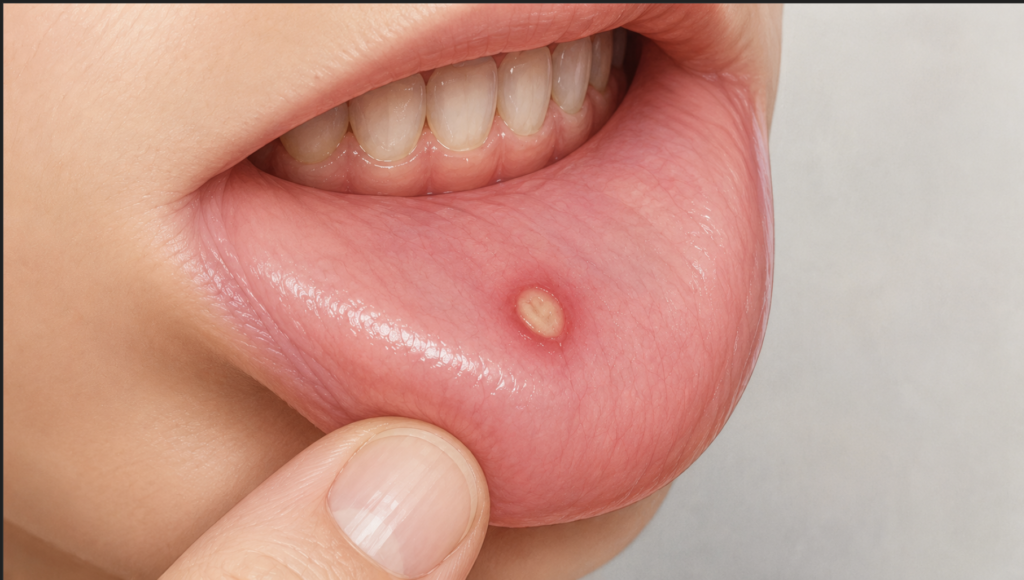
An aphthous ulcer is a small, round-to-oval mucosal erosion with a yellow-gray center and a red halo. Pathology is best understood as a localized T-cell–mediated immune reaction against the oral epithelium, but the trigger of that reaction is not a single identifiable pathogen or molecule [Edgar, Recurrent Aphthous Stomatitis: A Review, 2017].
There are three clinical forms. Minor ulcers (the most common) are under 1 cm and heal in 7–10 days without scarring. Major ulcers are larger than 1 cm, deeper, and can take several weeks to heal, sometimes with scarring. Herpetiform ulcers are clusters of small pinpoint lesions [Plewa, Recurrent Aphthous Stomatitis (StatPearls), 2023].
One feature is worth holding onto because it dictates where these lesions appear: most typical aphthous ulcers form on nonkeratinized oral mucosa — the soft, mobile, unkeratinized lining of the mouth.
Where Aphthous Ulcers Actually Appear
Most patient-facing articles list the same locations: inner lips, inner cheeks, tongue, and floor of the mouth. That is correct, and the inner labial mucosa is by far the most common site.
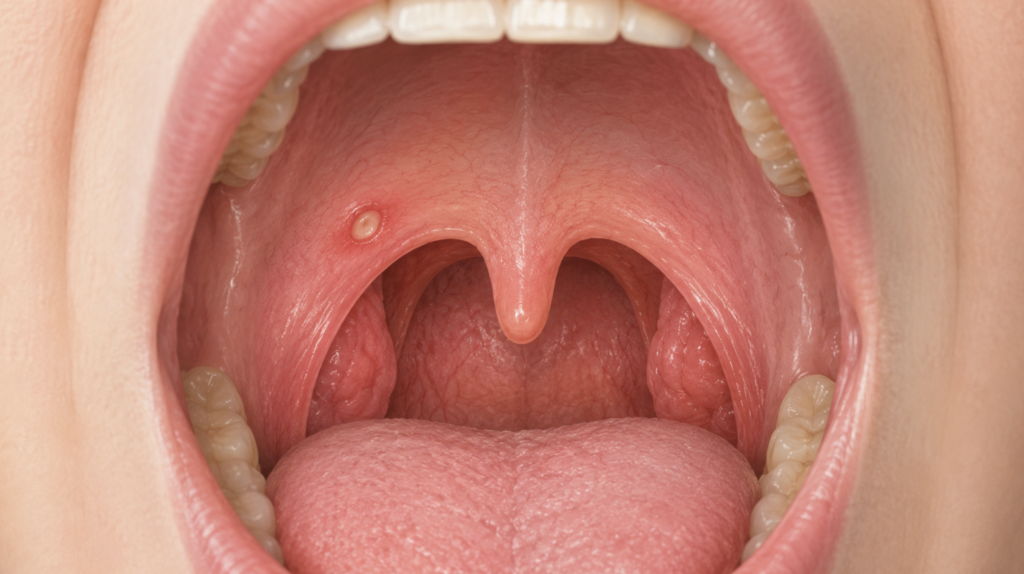
What is left out is the rest of the nonkeratinized mucosa — and this is the part an ENT clinic sees regularly:
- Soft palate
- Tonsillar pillars (anterior and posterior)
- Uvula
- Posterior oropharyngeal wall (rare)
These oropharyngeal locations share the same nonkeratinized epithelium as the inner lip, so the same disease can appear there. In practice, an ulcer on the tonsillar pillar or uvula is frequently mistaken by patients for tonsillitis, strep infection, or — in the most anxious version of the visit — oral cancer. Aphthous ulcers do not appear on the hard palate, the attached gingiva (the gum tissue tightly bound to bone), or the dorsum of the tongue, because those surfaces are keratinized.
What Causes Them — And What We Don’t Know
The honest answer is that no single cause has been confirmed. The condition is multifactorial, and the most consistently associated triggers are:
- Local trauma — cheek bite, sharp filling, orthodontic appliance, hard food
- Nutritional deficiency — vitamin B12, iron, folate, and zinc are the most cited
- Stress and sleep deprivation
- Hormonal changes — some patients track outbreaks to menstrual cycles
- SLS (sodium lauryl sulfate) in toothpaste — limited but suggestive evidence
- Genetic predisposition — a positive family history is common
- Associated systemic conditions — Behçet’s disease, inflammatory bowel disease, celiac disease, HIV, and cyclic neutropenia all need to be considered when ulcers are frequent, severe, or accompanied by other symptoms [Belenguer-Guallar, Treatment of recurrent aphthous stomatitis. A literature review, 2014]
What we do not have, despite hundreds of studies, is a validated biomarker or a unifying mechanism. Aphthous ulcers remain a clinical diagnosis based on appearance, history, and exclusion.
What Aphthous Ulcer Treatment We Can and Cannot Do
This is the section where most articles overpromise. The 2026 umbrella review by Al-Aizari and colleagues pooled 41 systematic reviews and reached a measured conclusion: topical corticosteroids and low-level laser therapy consistently reduce pain and shorten healing time, hyaluronic acid and several herbal agents show short-term symptomatic benefit, but the evidence for preventing recurrence is limited across all interventions [Al-Aizari, Evidence-based recommendations for the treatment of recurrent aphthous stomatitis: insights from an umbrella review, 2026].
A few representative numbers help put the magnitude in perspective:
- In a head-to-head trial of sucralfate versus chlorhexidine mouthrinse, the mean healing time was 1.97 days in the sucralfate group and 2.80 days in the chlorhexidine group — both shorter than the natural 7–10 day course for minor ulcers, but reflecting reepithelialization rather than full resolution, and both options remain modestly effective [Soylu Özler, The Efficacy of Sucralfate and Chlorhexidine as an Oral Rinse in Patients with Recurrent Aphthous Stomatitis, 2014].
- A 2024 systematic review and meta-analysis of low-level laser therapy across 21 randomized trials found significant immediate pain reduction and shorter healing time compared to sham or conventional treatment — but the effect was strongest in the first three days, and the trials varied substantially in laser parameters [Radithia, Effectiveness of low-level laser therapy in reducing pain score and healing time of recurrent aphthous stomatitis, 2024].
In plain terms: treatment can shave a few days off healing and meaningfully reduce pain, especially in the first week. There is no current therapy — topical, systemic, or device-based — that can be honestly described as making the ulcer disappear quickly, and none that reliably prevents the next outbreak.
Systemic agents such as oral corticosteroids, colchicine, dapsone, and thalidomide exist for severe or refractory disease, but their side-effect profiles mean they are reserved for major aphthae or for ulcers associated with systemic illness like Behçet’s [Edgar, Recurrent Aphthous Stomatitis: A Review, 2017].
Reducing Pain and Discomfort While It Heals
This is the part of the visit that matters most to patients. Almost no one walks into the clinic expecting the ulcer to disappear overnight — what they want is a way to make eating, drinking, and sleeping bearable until it heals on its own. That is a realistic goal, and one of the few areas where medicine has genuinely useful options to offer. Several measures can meaningfully reduce pain, protect the lesion during meals, and make the worst 2–3 days livable, even when none of them dramatically shorten the ulcer’s course.
Topical anesthetics. Lidocaine-based gels, sprays, and viscous solutions numb the ulcer surface within minutes. They are most useful applied 10–15 minutes before meals when the ulcer would otherwise make eating intolerable. Effect is short — about 30–60 minutes — but predictable. Benzocaine-based over-the-counter products work similarly. Concentration, formulation, and safe dosing vary by product and region, so use should follow the labeled instructions or a clinician’s guidance [Belenguer-Guallar, Treatment of recurrent aphthous stomatitis. A literature review, 2014].
Topical corticosteroids. Triamcinolone acetonide 0.1% in an oral adhesive paste, or a dexamethasone elixir used as a rinse, reduces both inflammation and pain. This is the first-line prescription option in most guidelines and the treatment with the most consistent evidence for symptomatic benefit [Al-Aizari, Evidence-based recommendations for the treatment of recurrent aphthous stomatitis: insights from an umbrella review, 2026].
Bioadhesive barrier products. Sucralfate suspension, hyaluronic acid gel, and cellulose-polymer pastes form a thin film over the ulcer that protects exposed nerve endings from food, drink, and tongue contact. Many patients describe the relief as “the ulcer is finally covered.” Sucralfate has the additional benefit of modest evidence for shorter healing time, though it is worth noting that sucralfate is licensed primarily as a gastrointestinal agent in most countries, including Korea, and its use as an oral rinse for aphthous ulcers is off-label [Soylu Özler, The Efficacy of Sucralfate and Chlorhexidine as an Oral Rinse in Patients with Recurrent Aphthous Stomatitis, 2014].
Antiseptic mouthrinse. Chlorhexidine 0.12–0.2% rinse provides mild symptomatic benefit and reduces secondary bacterial colonization. Pain relief is weaker than with corticosteroids or sucralfate, and prolonged use stains teeth, so it is best used as a short course.
Low-level laser therapy. When available, a single laser session can reduce pain noticeably within hours and is one of the few options with rapid analgesic effect supported by randomized data. The trade-off is that it requires a clinic visit and equipment access [Radithia, Effectiveness of low-level laser therapy in reducing pain score and healing time of recurrent aphthous stomatitis, 2024].
Systemic analgesics. For severe pain, a short course of an oral NSAID such as ibuprofen, or acetaminophen, is reasonable and often overlooked. Aspirin should never be placed directly on the ulcer — a common folk remedy that causes chemical burns and worsens the lesion.
Diet and behavior. These sound minor and are often the most useful day-to-day measures:
- Avoid acidic foods (citrus, tomato), spicy foods, sharp or crunchy foods (chips, crackers), and very hot temperatures during the painful phase
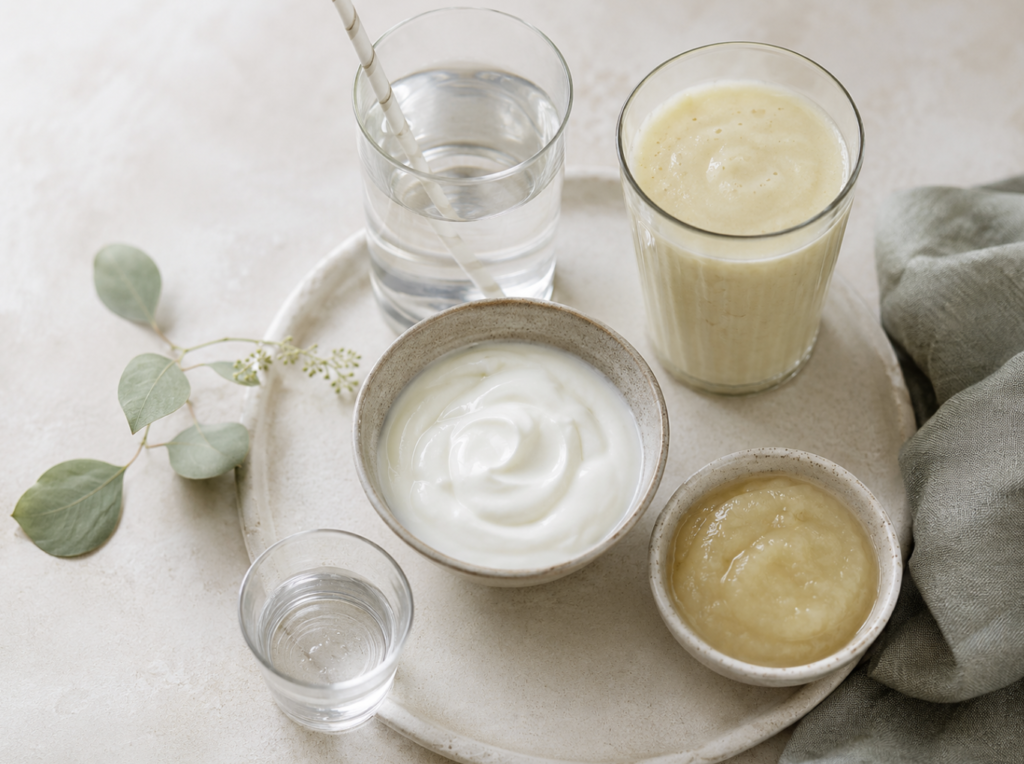
- Use a straw for cool liquids to bypass ulcers on the inner lip or anterior mouth
- Cool or iced foods (yogurt, smoothies, popsicles) provide brief local relief
- A warm saltwater rinse (½ teaspoon salt in a cup of warm water) several times a day is harmless and modestly soothing for some patients
- Soft, lukewarm meals during the worst 2–3 days
Chemical cautery — with caution. Products such as silver nitrate or policresulen (“Albothyl”) cauterize the ulcer and can give longer-lasting pain relief after a sharp initial burn. Evidence on safety is mixed, mucosal injury can result from overuse, and several countries have restricted policresulen for oral mucosal application. These should not be used routinely or without clinical supervision.
The realistic framing for a patient is this: medicine cannot make the ulcer go away overnight, but a sensible combination of a barrier product, a topical anesthetic before meals, and dietary adjustments can make the painful days substantially more livable.
What Prevention Can and Cannot Do
The evidence on prevention is weaker than the evidence on acute treatment, and most patient-facing advice runs ahead of what has been proven. Sensible, low-harm measures include correcting documented deficiencies in B12, iron, folate, or zinc, switching to an SLS-free toothpaste, addressing sharp dental edges or appliance issues, and managing the obvious triggers — stress, sleep, and known food irritants. None of these has high-quality evidence of reducing recurrence rate in unselected patients.
The 2026 umbrella review noted this directly: across all interventions, evidence for recurrence prevention is limited. That is not a marketing slogan; that is the current state of the literature.
With Treatment vs. Without — A Realistic View
For a healthy adult with a minor aphthous ulcer (under 1 cm) in a tolerable location, doing nothing — beyond practical pain control during the worst days — is a reasonable choice. The ulcer will heal in 7–10 days. The worst pain is the first 2–3 days, after which it improves on its own.
Active treatment is more worth the trouble when the ulcer is larger than 1 cm, when it is on the soft palate, tonsillar pillar, or uvula and is making eating or swallowing genuinely difficult, when the patient gets three or more attacks per year, or when pain is interfering with sleep or work.
A medical consultation — preferably with an ENT or oral medicine specialist — becomes important if an ulcer lasts longer than three weeks, if it is unusually large or hard-edged (induration is a red flag), if there are multiple persistent ulcers with systemic symptoms, or if the appearance is in any way atypical.
Clinical Perspective
Two patterns come up regularly in clinic. The first is the patient who has been treating a stubborn aphthous ulcer for weeks with progressively stronger remedies, hoping for a breakthrough that the evidence simply does not support. The most useful intervention, in many of these cases, is not a new medication but identifying and removing a local trigger — a sharp tooth, an ill-fitting appliance, an aggressive brushing habit, a toothpaste change.
The second is the patient who is reassured to learn that “no good treatment” is not a failure of their particular doctor or product — it is a real limitation of the field. Honesty about the limits of medicine is, in this disease, a more therapeutic act than a prescription.
Key Takeaways
- Most typical aphthous ulcers form on nonkeratinized oral mucosa, which is why they can appear on the soft palate, tonsillar pillars, and uvula — not only on the lips and cheeks.
- The cause is multifactorial and no single biomarker or unifying mechanism has been confirmed.
- Without treatment, minor ulcers heal in 7–10 days; major ulcers can take several weeks and may scar.
- Topical corticosteroids and low-level laser therapy reduce pain and shorten healing time by a few days, but no current therapy reliably prevents recurrence.
- Pain and eating discomfort during healing can be meaningfully reduced with topical anesthetics, bioadhesive barrier products, topical corticosteroids, and sensible dietary adjustments — even though none of these cures the ulcer.
- An ulcer lasting more than three weeks, or one that is indurated or atypical, should be evaluated in person to exclude other diagnoses.
FAQ
Can a canker sore form on the tonsil or uvula? Yes. Any nonkeratinized oral mucosa — including tonsillar pillars, uvula, and soft palate — can develop an aphthous ulcer. Because patients do not expect canker sores in the throat, these are commonly mistaken for tonsillitis or throat infection.
How long does a canker sore last without any treatment? Minor aphthous ulcers heal on their own in 7–10 days, with the worst pain in the first two to three days. Major ulcers (over 1 cm) can take two to six weeks and may leave a small scar.
Does topical steroid actually work? Yes — topical corticosteroids are first-line therapy and modestly shorten healing time while reducing pain. They do not prevent the next outbreak, and they should not be used continuously for prophylaxis.
What helps with the pain while it heals? A topical anesthetic such as lidocaine applied 10–15 minutes before meals, a bioadhesive barrier product such as sucralfate or hyaluronic acid gel, and dietary adjustments (avoiding acidic, spicy, sharp, or very hot foods) provide the most practical day-to-day relief. Topical corticosteroids add anti-inflammatory effect, and an oral NSAID like ibuprofen helps with severe pain.
Why do I keep getting them? Recurrence is the defining feature of aphthous stomatitis. Triggers include trauma, stress, hormonal cycles, and nutritional deficiencies, but in most patients no single cause is identified, and no preventive therapy has strong evidence of reducing recurrence rate.
When should I see a doctor? If an ulcer lasts longer than three weeks, is unusually large or hard-edged, recurs frequently with other systemic symptoms (joint pain, eye symptoms, genital ulcers, gastrointestinal symptoms), or appears atypical, see an ENT or oral medicine specialist.
References
- Al-Aizari NA, Al-Shamiri HM, AlShehri BK, Alhomood KS, Alzahrani SR, Abuhasna WR, Al-Maweri SA. Evidence-based recommendations for the treatment of recurrent aphthous stomatitis: insights from an umbrella review. J Dermatolog Treat. 2026;37(1):2622245.
- Edgar NR, Saleh D, Miller RA. Recurrent Aphthous Stomatitis: A Review. J Clin Aesthet Dermatol. 2017;10(3):26-36.
- Plewa MC, Chatterjee K. Recurrent Aphthous Stomatitis. In: StatPearls. Treasure Island (FL): StatPearls Publishing; 2023.
- Soylu Özler G, Okuyucu Ş, Akoğlu E. The Efficacy of Sucralfate and Chlorhexidine as an Oral Rinse in Patients with Recurrent Aphthous Stomatitis. Adv Med. 2014;2014:986203.
- Radithia D, Mahdani FY, Bakti RK, Parmadiati AE, Subarnbhesaj A, Pramitha SR, Pradnyani IGAS. Effectiveness of low-level laser therapy in reducing pain score and healing time of recurrent aphthous stomatitis: a systematic review and meta-analysis. Syst Rev. 2024;13(1):187.
- Belenguer-Guallar I, Jiménez-Soriano Y, Claramunt-Lozano A. Treatment of recurrent aphthous stomatitis. A literature review. J Clin Exp Dent. 2014;6(2):e168-e174.
Joonpyo Hong, MD is a board-certified otolaryngologist practicing in Korea. This article reflects his clinical interpretation of published research and does not constitute individual medical advice.
For more interesting contents:
https://curiousmd.com/leukoplakia-white-patches-cancer-risk/
https://curiousmd.com/prescription-vs-over-the-counter-mouthwash/
https://curiousmd.com/long-term-effects-of-vaping-vs-smoking-ent/
Link out to:
Cleveland Clinic – Canker Sore:
https://my.clevelandclinic.org/health/diseases/10945-canker-sores
MedlinePlus (NIH) – Canker sore:
https://medlineplus.gov/ency/article/000998.htm
Cochrane – Systemic interventions for RAS:
https://www.cochrane.org/evidence/CD005411-systemic-interventions-recurrent-aphthous-stomatitis-mouth-ulcers
Al-Aizari 2026 Umbrella Review: https://www.tandfonline.com/doi/full/10.1080/09546634.2026.2622245