
Does Ginkgo Biloba Work? It depends entirely on what you are taking it for. Ginkgo biloba is one of the best-selling “brain” supplements in the world, marketed almost everywhere as a memory aid and a remedy for ringing ears. Yet those two headline uses, memory and tinnitus, are exactly where the independent evidence is weakest. When you separate the manufacturer-funded studies from the independent ones, and the marketing from the trial data, a more honest picture emerges. This article sorts what works, what doesn’t, and what remains genuinely unproven, then answers the question patients actually ask: if the side effects are low, is there any harm in trying it anyway?
What Ginkgo Biloba Is
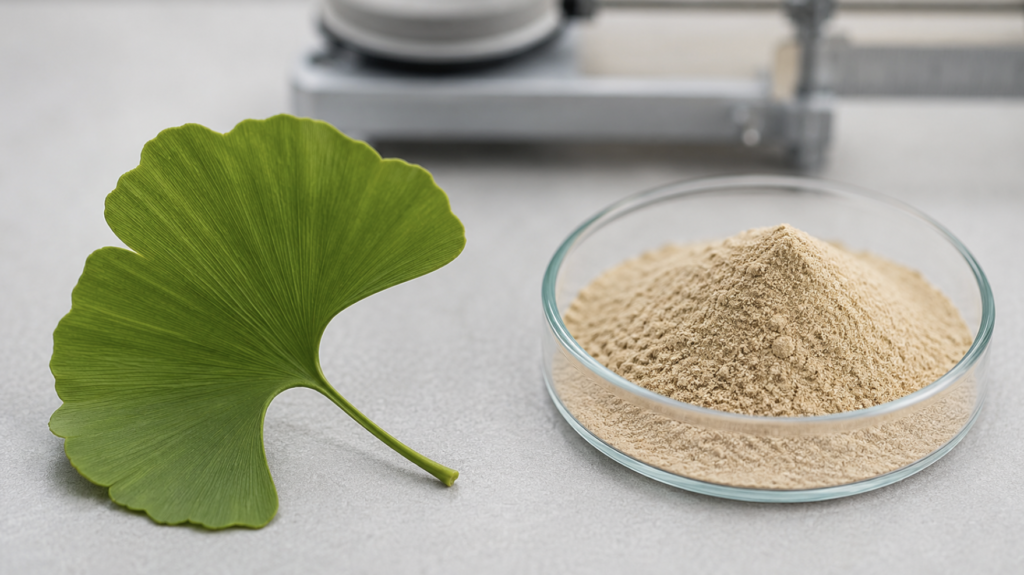
Ginkgo biloba is one of the oldest surviving tree species on earth, and its leaf extract has been used in traditional medicine for centuries. In the 1960s a German pharmaceutical company developed a standardized leaf extract, known in the research literature as EGb 761, which became the version most clinical trials have studied.
The word “standardized” is doing heavy lifting here. EGb 761 is adjusted to roughly 24% flavonoid glycosides and 6% terpene lactones (ginkgolides and bilobalide), with the potentially allergenic ginkgolic acids reduced to trace levels. Its proposed mechanisms include antioxidant and free-radical scavenging activity, improved blood flow, and antagonism of platelet-activating factor [DeFeudis, Ginkgo biloba extract EGb 761 and CNS functions, 2000].
This matters for one practical reason: almost all of the positive clinical evidence comes from EGb 761 specifically, not from ginkgo in general. A capsule bought off a supplement shelf may contain a different concentration, a different extraction, or a different plant part entirely. When someone asks “does ginkgo work,” the honest answer starts with “which ginkgo, and studied by whom?”
What the Trials Show
The best-supported use is still modest: symptoms of diagnosed dementia
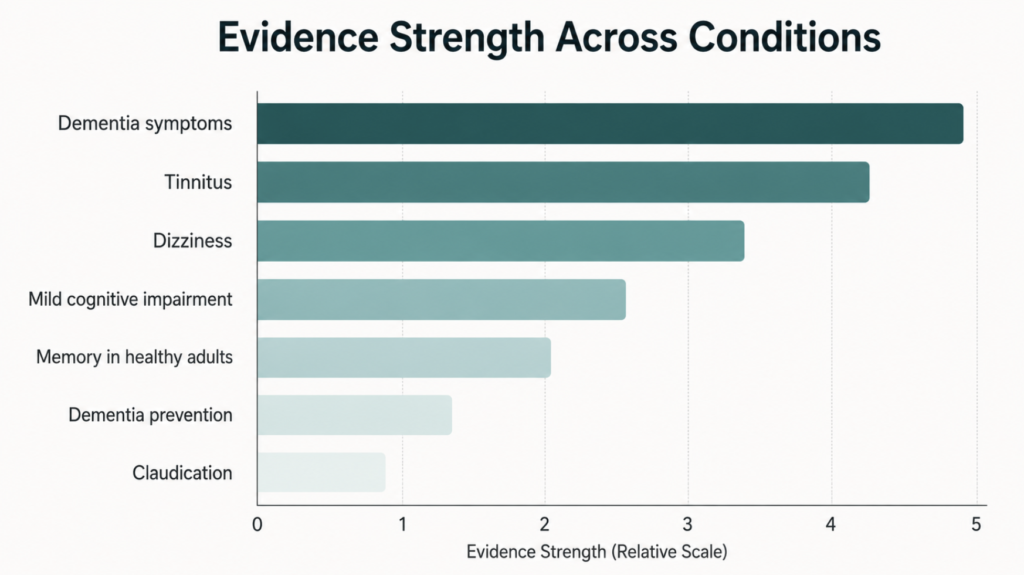
The most consistent positive signal is not prevention or memory enhancement, but symptom relief in people already diagnosed with dementia. In a 24-week trial of 410 patients with mild-to-moderate dementia and neuropsychiatric symptoms, EGb 761 at 240 mg improved cognition and behavior more than placebo [Herrschaft, EGb 761 in dementia with neuropsychiatric features, 2012].
Crucially, this signal also survives independent scrutiny. A 2026 Cochrane review pooling 82 trials and 10,613 participants found that, in people with an established dementia diagnosis, ginkgo may offer small-to-moderate benefits at six months — while cautioning that the certainty of the evidence was low and the trials were highly heterogeneous [Wieland, Ginkgo biloba for cognitive impairment and dementia, 2026]. So even the best case is a modest, low-certainty benefit for symptoms, not a disease-modifying effect.
Popular but unproven: tinnitus and dizziness
This is where honesty matters most, because ginkgo is prescribed for tinnitus constantly, and the picture looks supportive only until you check who ran the studies. A single-author review restricted to EGb 761 concluded it was an evidence-based option for tinnitus [von Boetticher, Ginkgo biloba extract in the treatment of tinnitus, 2011], and a meta-analysis co-authored by the extract’s manufacturer found EGb 761 240 mg superior to placebo for both tinnitus and dizziness [Spiegel, EGb 761 alleviates neurosensory symptoms in patients with dementia, 2018].
Two caveats undercut that optimism. First, those favorable results come largely from manufacturer-affiliated work and from patients who had dementia, with tinnitus or dizziness only as a secondary symptom — not from people whose main problem was tinnitus. Second, independent Cochrane reviews reach the opposite conclusion.
A 2013 Cochrane review of four trials found no evidence of benefit when tinnitus was the primary complaint; the only positive signal came from a dementia trial, where the reduction was small (about 1.5 and 0.7 points on a 10-point scale) and its clinical significance unclear [Hilton, Ginkgo biloba for tinnitus, 2013]. A 2022 Cochrane update covering 12 trials and 1,915 participants concluded that the benefits and harms remain uncertain, with evidence rated low to very low [Sereda, Ginkgo biloba for tinnitus, 2022]. Both independent reviews did find reassuring safety, with no excess bleeding or seizures.
The honest summary for these ENT symptoms: for tinnitus or dizziness as a primary complaint, ginkgo has not been shown to work in independent, rigorous trials. It remains biologically plausible and low-risk, but the clear evidence patients deserve is not there yet.
No benefit: prevention, everyday memory, and circulation
Preventing dementia. The Ginkgo Evaluation of Memory study followed more than 3,000 older adults for a median of 6.1 years on 120 mg twice daily and found no reduction in dementia or Alzheimer’s incidence — the result actually favored placebo slightly [DeKosky, Ginkgo biloba for prevention of dementia, 2008].
Mild impairment and everyday memory. The 2026 Cochrane review found little or no benefit for mild cognitive impairment, and uncertain-to-no benefit for subjective memory complaints [Wieland, Ginkgo biloba for cognitive impairment and dementia, 2026]. The popular use case — a healthy person taking ginkgo to sharpen memory — is the least supported of all.
Circulation (intermittent claudication). Ginkgo’s earliest indication was poor circulation, but a Cochrane review of 14 trials found no clinically significant benefit for peripheral arterial disease, with small walking-distance gains likely inflated by publication bias [Nicolai, Ginkgo biloba for intermittent claudication, 2009].
Is It Safe? And the “No Harm in Trying” Question
On the surface, ginkgo looks benign. The 2026 Cochrane review found little or no difference in overall or serious adverse events versus placebo for up to 12 months [Wieland, Ginkgo biloba for cognitive impairment and dementia, 2026], and doses up to 240 mg/day are generally well tolerated.
The real concern is bleeding, because ginkgo antagonizes platelet-activating factor. Here the evidence is genuinely mixed. A review of controlled studies found that ginkgo did not significantly impair clotting or worsen the safety of aspirin or warfarin, and that most bleeding “signals” came from low-quality case reports — while cautioning that an idiosyncratic bleeding event still cannot be fully ruled out [Bone, Potential interaction of Ginkgo biloba leaf with antiplatelet or anticoagulant drugs, 2008]. In practice that means caution rather than alarm: the patients who warrant a conversation with their physician are those on antiplatelet or anticoagulant drugs, those scheduled for surgery, and those taking several agents that affect clotting.
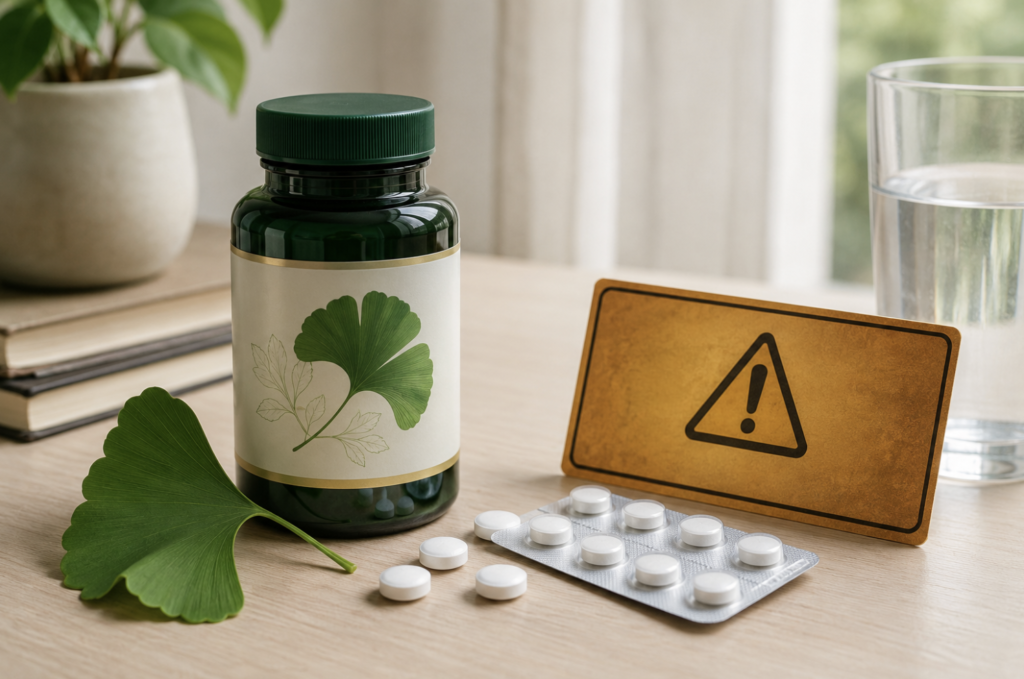
Clinical Perspective “Low side effects, so why not try it?” is only half right. The safety is conditional — bleeding risk and drug interactions are real for a specific group of patients, and raw ginkgo seeds carry a toxicity that standardized extracts are engineered to avoid.
“Harmless” also ignores cost and opportunity cost: money spent on an unproven remedy, and the risk of delaying evaluation for a treatable cause of tinnitus, dizziness, or cognitive change. And the evidence attaches to the product and the population, not to the plant — favorable tinnitus data come mostly from manufacturer-linked studies in dementia patients, while independent trials in primary tinnitus have not shown benefit. A standardized extract is a defensible, low-risk thing to try with realistic expectations, but it should sit alongside a proper assessment, not replace it.
Key Takeaways
- Almost all of ginkgo’s positive evidence is tied to one standardized extract, EGb 761 — generic supplements are not equivalent.
- For tinnitus and dizziness as a main complaint, independent trials have not shown that ginkgo works, despite its popularity.
- The most consistent benefit — still modest and low-certainty — is symptom relief in people already diagnosed with dementia.
- For preventing dementia and for everyday memory in healthy adults, well-designed trials found no benefit.
- Ginkgo is generally safe up to 240 mg/day, but bleeding risk warrants caution with blood thinners and before surgery.
FAQ
Does ginkgo biloba improve memory in healthy people? The evidence is insufficient. A large, multi-year prevention trial found no reduction in dementia or Alzheimer’s incidence, and reviews show little benefit for mild cognitive impairment or subjective memory complaints. Ginkgo’s reputation as a memory booster is not supported by rigorous trials, even though it remains one of the most popular supplements sold for that purpose.
Is ginkgo good for tinnitus? Independent evidence does not show that it works for tinnitus as a primary complaint. Two Cochrane reviews found no convincing benefit, and the more favorable results come largely from manufacturer-linked studies in dementia patients. Ginkgo is low-risk, so some people try a standardized extract, but expectations should be modest and it should not replace a proper tinnitus assessment.
Can I take ginkgo with aspirin or warfarin? Caution is warranted, and this is a conversation to have with your physician. Ginkgo has mild antiplatelet activity, and although controlled studies have not consistently shown dangerous interactions, isolated bleeding events cannot be excluded. Anyone on antiplatelet or anticoagulant medication, or facing surgery, should not add ginkgo without medical review.
Are all ginkgo supplements the same? No. Most clinical evidence comes from EGb 761, a standardized extract with defined concentrations of active compounds and minimized ginkgolic acid. Over-the-counter products vary widely in content and purity, so results from EGb 761 trials cannot be assumed to transfer to an arbitrary supplement on the shelf.
References
- Wieland LS, Ludeman E, Chi Y, Feinberg TM, Chen IH, Chen KH, Zhu Y, Wolverson E, Amri H. Ginkgo biloba for cognitive impairment and dementia. Cochrane Database Syst Rev. 2026;2(2):CD013661.
- DeKosky ST, Williamson JD, Fitzpatrick AL, Kronmal RA, Ives DG, Saxton JA, et al. Ginkgo biloba for prevention of dementia: a randomized controlled trial. JAMA. 2008;300(19):2253-62.
- Hilton MP, Zimmermann EF, Hunt WT. Ginkgo biloba for tinnitus. Cochrane Database Syst Rev. 2013;2013(3):CD003852.
- Sereda M, Xia J, Scutt P, Hilton MP, El Refaie A, Hoare DJ. Ginkgo biloba for tinnitus. Cochrane Database Syst Rev. 2022;11(11):CD013514.
- von Boetticher A. Ginkgo biloba extract in the treatment of tinnitus: a systematic review. Neuropsychiatr Dis Treat. 2011;7:441-7.
- Spiegel R, Kalla R, Mantokoudis G, Maire R, Mueller H, Hoerr R, Ihl R. Ginkgo biloba extract EGb 761 alleviates neurosensory symptoms in patients with dementia: a meta-analysis of treatment effects on tinnitus and dizziness in randomized, placebo-controlled trials. Clin Interv Aging. 2018;13:1121-1127.
- Herrschaft H, Nacu A, Likhachev S, Sholomov I, Hoerr R, Schlaefke S. Ginkgo biloba extract EGb 761 in dementia with neuropsychiatric features: a randomised, placebo-controlled trial to confirm the efficacy and safety of a daily dose of 240 mg. J Psychiatr Res. 2012;46(6):716-23.
- Bone KM. Potential interaction of Ginkgo biloba leaf with antiplatelet or anticoagulant drugs: what is the evidence? Mol Nutr Food Res. 2008;52(7):764-71.
- Nicolai SPA, Kruidenier LM, Bendermacher BLW, Prins MH, Teijink JAW. Ginkgo biloba for intermittent claudication. Cochrane Database Syst Rev. 2009;(2):CD006888.
- DeFeudis FV, Drieu K. Ginkgo biloba extract (EGb 761) and CNS functions: basic studies and clinical applications. Curr Drug Targets. 2000;1(1):25-58.
Joonpyo Hong, MD is a board-certified otolaryngologist practicing in Korea. This article reflects his clinical interpretation of published research and does not constitute individual medical advice.
For more interesting content:
https://curiousmd.com/ai-chatbot-for-tinnitus/
https://curiousmd.com/tms-therapy-conditions-tinnitus/
https://curiousmd.com/tinnitus-bimodal-stimulation-cbt-2026/
Link out to:
https://www.nccih.nih.gov/health/ginkgo
https://www.cochrane.org/evidence/CD013661_what-are-benefits-and-risks-ginkgo-biloba-cognitive-impairment-and-dementia
https://www.mayoclinic.org/drugs-supplements-ginkgo/art-20362032