
We blamed pollen in spring. Now it’s July, the trees finished pollinating weeks ago, and still sneezing, rubbing itchy eyes, and going through tissues. That is not a stubborn spring reaction dragging on, and it is usually not a summer cold either. Summer allergic rhinitis is a distinct, well-documented condition, and its main drivers are grass pollen and outdoor mold. This piece covers how common it is, what actually causes it, and how it differs from the spring, fall, and year-round versions.
Yes, Summer Allergic Rhinitis Is Real — and Often Misread
Grass pollen is one of the major outdoor causes of hay fever, not a minor footnote to tree season [Suphioglu, Thunderstorm asthma due to grass pollen, 1998]. Yet many people are convinced allergies belong to spring alone, and there is a simple reason why.
The pollen calendar works like a relay. Trees pollinate in spring, then hand off to grasses through the summer, which later hand off to weeds such as ragweed in the fall. If you react to more than one of these, your symptoms never actually stopped — the source underneath them quietly changed. Someone sensitive to both oak and Timothy grass, for example, can run near-continuous symptoms from April into July and reasonably assume it is all “spring allergies that won’t quit.”
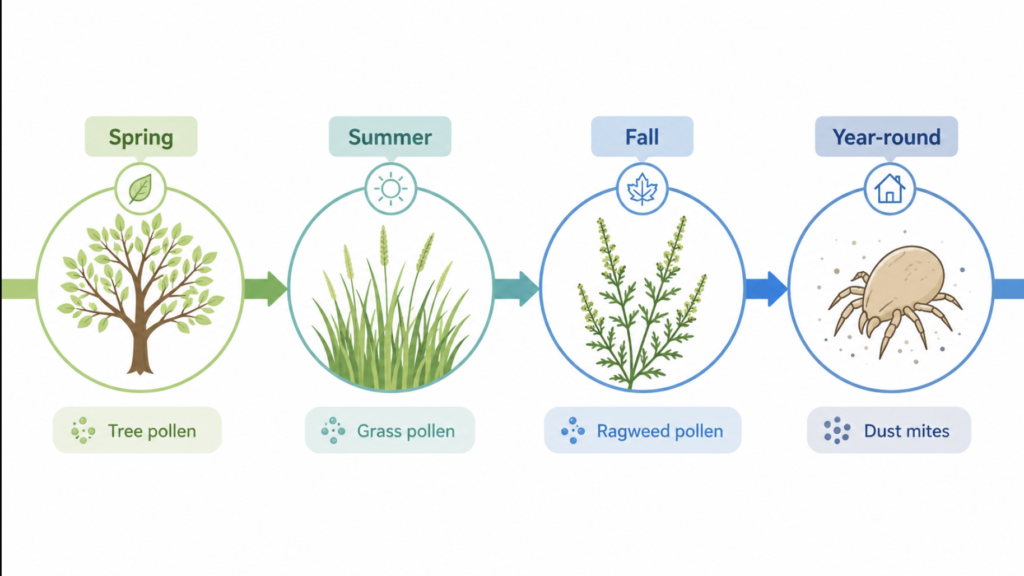
That misreading is why summer allergic rhinitis so often gets filed under “a cold I can’t shake” or “leftover spring allergies,” and why the real trigger goes unaddressed.
Summer’s Signature Allergens
Two allergen groups dominate the season.
| Allergen group | Representative examples | Why it matters in summer |
|---|---|---|
| Grass pollen | Timothy (Phleum pratense), ryegrass (Lolium), orchard grass (Dactylis), Kentucky bluegrass (Poa), Bermuda in warmer regions | The leading summer trigger; light and wind-borne, so exposure happens even away from lawns |
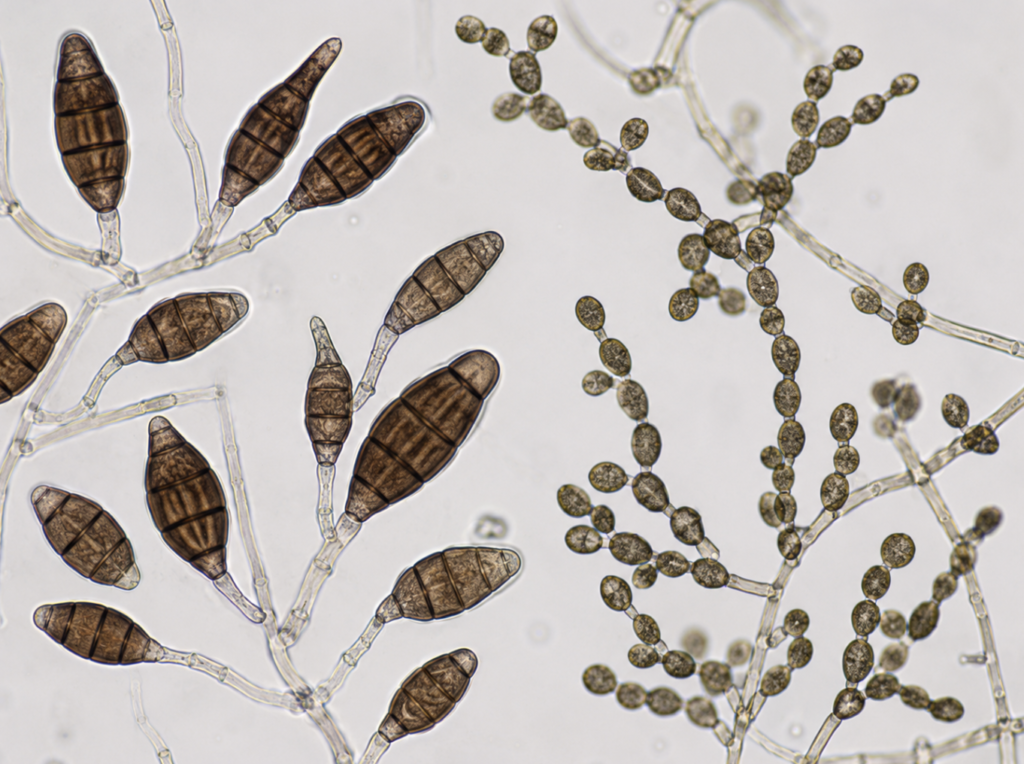
| Outdoor mold | Cladosporium, Alternaria | Spore counts climb in warm, humid weather; both are linked to asthma flare-ups, especially in children |
Temperate grasses in the Pooideae group are the usual culprits, and their major allergen molecules — such as the group 5 allergen found in ryegrass — drive much of the immune response [Sialakis, House Dust Mite and Grass Pollen Allergen Extracts, 2022; Suphioglu, Thunderstorm asthma due to grass pollen, 1998].
Mold is the trigger people forget: Cladosporium and Alternaria are two of the most common outdoor molds, and epidemiological studies link exposure to them with asthma exacerbations, most consistently in children [Caillaud, Outdoor Mold and Respiratory Health, 2022]. A humid week after summer rain, or an afternoon spent near cut grass and compost, can raise both loads at once.
How Summer Allergic Rhinitis Differs From Spring, Fall, and Year-Round
The season is not just “spring with different plants.” It has features the others lack.
| Pattern | Dominant allergen | Typical timing |
|---|---|---|
| Spring | Tree pollen | Early to late spring |
| Summer | Grass pollen + outdoor mold | Late spring through summer |
| Fall | Weed pollen (ragweed) | Late summer into fall |
| Year-round (perennial) | Dust mite, pet dander, cockroach | No seasonal pattern; mostly indoors |
A different asthma signal. This is where summer stands apart. Grass pollen sensitivity is mainly a risk for seasonal rhinitis and only rarely for asthma, whereas Alternaria mold sensitization is an established risk factor for actually developing asthma in both children and adults [Nelson, The importance of allergens in the development of asthma, 2000]. The summer pairing of grass and Alternaria therefore combines classic hay fever with a genuine lower-airway risk that tree or dust-mite exposure does not carry in the same way.
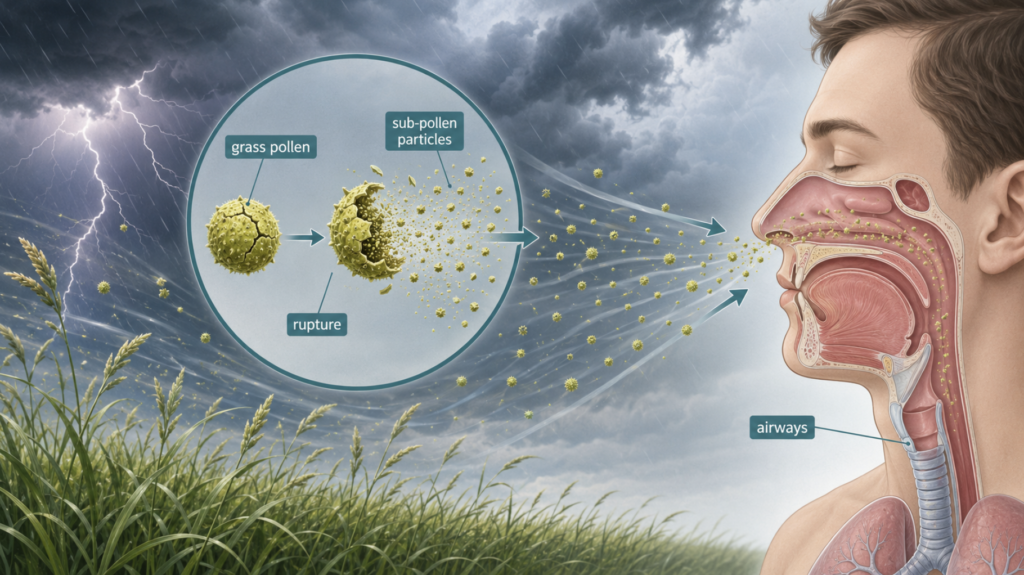
Thunderstorm asthma — a summer-only phenomenon. During storms in the grass-pollen season, pollen grains can rupture and release sub-pollen particles small enough (under 5 micrometers) to reach the lower airways and set off sudden asthma [Suphioglu, Thunderstorm asthma due to grass pollen, 1998]. In a case-control analysis from south-eastern Australia, thunderstorm outflows were present on roughly a third of asthma-epidemic days versus 3% of control days, the link was strongest in late spring and summer, and grass pollen jumped 4- to 12-fold around one severe event [Marks, Thunderstorm outflows preceding epidemics of asthma, 2001]. Spring and fall do not produce this signature event.
A food connection. Grass-pollen allergy can travel with pollen-food allergy syndrome, in which proteins in certain raw fruits and vegetables cross-react with pollen and cause an itchy mouth or throat [Kato, Comprehensive review of pollen-food allergy syndrome, 2025]. Peak summer produce season is exactly when a grass-allergic person might notice it. By contrast, perennial rhinitis from dust mites or pets shows no seasonal rhythm and tends to sit indoors as congestion — so a seasonal, outdoor, eye-heavy pattern points toward summer allergy rather than the year-round type.
Is It a Summer Cold or Allergies?
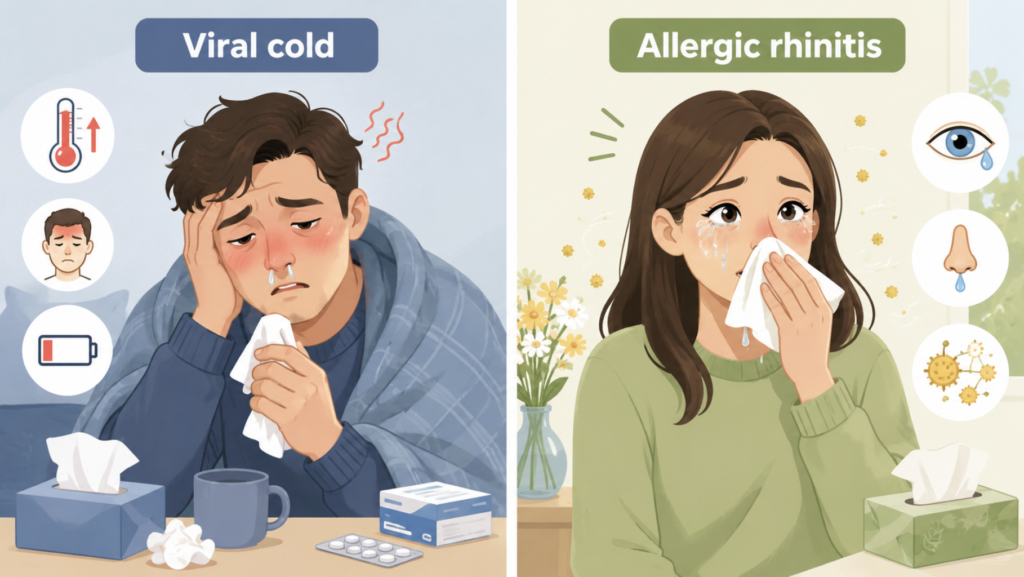
A few features separate the two. Itchy eyes and nose, a thin clear runny nose, no fever, and a pattern that repeats on a seasonal schedule point toward allergy. A viral cold usually clears within seven to ten days and may bring fever, sore throat, or body aches; allergic rhinitis persists as long as the pollen or mold stays in the air. Symptoms that reliably return the same weeks every year are the strongest clue.
What Actually Helps (the short version)
Treatment deserves its own article, so here is the essential version. Among single medications for seasonal allergic rhinitis, intranasal corticosteroid sprays outperform oral antihistamines for overall nasal symptoms and quality of life [Torres, Intranasal Versus Oral Treatments for Allergic Rhinitis, 2024]. Oral antihistamines still help sneezing and itch. Basic exposure control also lowers the load: keeping windows shut on high-pollen evenings, showering after time outdoors, and being cautious around mowing and damp yard debris. Anyone with wheeze or breathlessness alongside nasal symptoms should be evaluated rather than self-managed, given the mold–asthma link above.
Clinical Perspective
A frequently missed scenario is the person who gets the same “summer cold” every July. When a cold recurs on an annual schedule, itches, and never brings a fever, allergic rhinitis is the more likely explanation — and identifying the specific trigger through testing can change the plan, especially when mold exposure and any asthma history are in the picture. This reflects clinical interpretation of the published evidence, not a diagnosis for any individual.
Key Takeaways
- Summer allergic rhinitis is real, and grass pollen is its leading trigger — not “leftover” spring tree pollen.
- Outdoor molds (Cladosporium, Alternaria) are the other major summer allergen and are linked to asthma flare-ups.
- Unlike most pollen, Alternaria mold sensitization is a recognized risk factor for developing asthma.
- Thunderstorm asthma is a summer-specific risk, driven by grass pollen rupturing into inhalable particles.
- A recurring “summer cold” that itches and brings no fever is more likely allergy.
Frequently Asked Questions
Can you get allergic rhinitis in summer?
Yes. Summer allergic rhinitis is a well-recognized seasonal condition, driven mainly by grass pollen and outdoor mold rather than the tree pollen of spring. Because the trigger changes as the season shifts, ongoing symptoms in July are commonly mistaken for a lingering spring reaction or a summer cold.
If tree pollen is gone, what causes summer allergies?
Grass pollen is the leading summer trigger, joined by outdoor molds such as Cladosporium and Alternaria that thrive in warm, humid weather. Grass pollen is light and wind-borne, so you can react even without a lawn nearby.
How is summer hay fever different from spring?
The dominant allergen differs — grass and mold rather than tree pollen — and summer carries risks spring does not. Alternaria mold sensitization is tied to developing asthma, and thunderstorm asthma occurs specifically in the grass-pollen season.
Is it a summer cold or allergies?
Itchy eyes, a clear runny nose, no fever, and a pattern that returns each year point toward allergy. A cold usually resolves in about a week and may include fever or aches, while allergy symptoms last as long as the pollen or mold is present.
References
- Suphioglu C. Thunderstorm asthma due to grass pollen. Int Arch Allergy Immunol. 1998;116(4):253-260.
- Marks GB, Colquhoun JR, Girgis ST, Koski MH, Treloar AB, Hansen P, Downs SH, Car NG. Thunderstorm outflows preceding epidemics of asthma during spring and summer. Thorax. 2001;56(6):468-471.
- Nelson HS. The importance of allergens in the development of asthma and the persistence of symptoms. J Allergy Clin Immunol. 2000;105(6 Pt 2):S628-S632.
- Caillaud D, Keirsbulck M, Leger C, Leynaert B. Outdoor mold and respiratory health: state of science of epidemiological studies. J Allergy Clin Immunol Pract. 2022;10(3):768-784.
- Torres MI, Gil-Mata S, Bognanni A, et al. Intranasal versus oral treatments for allergic rhinitis: a systematic review with meta-analysis. J Allergy Clin Immunol Pract. 2024;12(12):3404-3418.
- Kato Y, Morikawa T, Fujieda S. Comprehensive review of pollen-food allergy syndrome: pathogenesis, epidemiology, and treatment approaches. Allergol Int. 2025;74(1):42-50.
- Sialakis C, Antoniou Sialaki P, Frantzana A, Iliadis C, Ouzounakis P, Kourkouta L. House dust mite and grass pollen allergen extracts for seasonal allergic rhinitis treatment: a systematic review. Cureus. 2022;14(7):e27289.
Joonpyo Hong, MD is a board-certified otolaryngologist practicing in Korea. This article reflects his clinical interpretation of published research and does not constitute individual medical advice.
Link out to:
- Mold allergy: symptoms and causes (Mayo Clinic)
- Rhinitis (hay fever) overview (American Academy of Allergy, Asthma & Immunology)
- Hay fever (allergic rhinitis): symptoms and treatment (American College of Allergy, Asthma & Immunology)
For more interesting content:
https://curiousmd.com/allergic-vs-nonallergic-rhinitis/
https://curiousmd.com/evolutionary-reason-for-allergies/
https://curiousmd.com/ai-allergy-forecast-personalized-prediction/
https://curiousmd.com/korea-2026-pollen-allergies/