Leukoplakia: Which White Mouth Patches Turn Into Cancer?
A white patch in your mouth or on your vocal cord that will not wipe off may be leukoplakia. Here is how doctors decide which patches are harmless and which carry real cancer risk.
A clinical guide to how sleep cycles by age change from newborn to adult — and the ENT problems that can disrupt them along the way.
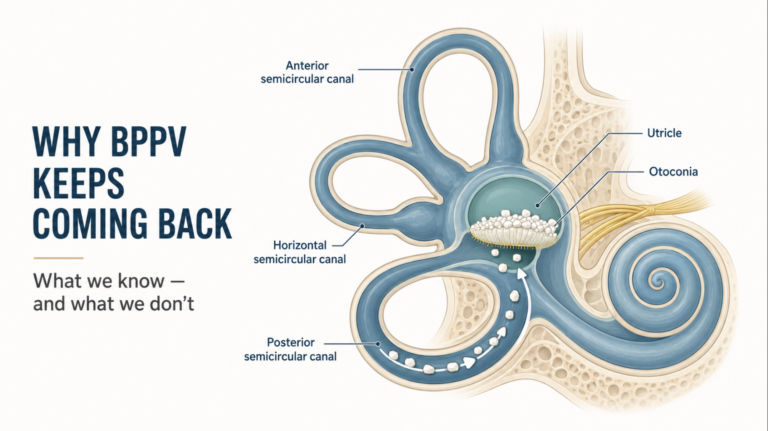
A maximal squat or deadlift can do something most lifters never expect — rupture an inner-ear window. The explosive mechanism, the red flags to recognize, and what return-to-lifting actually looks like after a perilymphatic fistula from weightlifting.
The relationship between music genre and hearing loss is closer than most people realize. An ENT specialist compares classical, ballad, hip-hop, and EDM — and explains which genres put your ears most at risk.
Sudden, brief stabbing ear pain with no other symptoms? An ENT explains primary stabbing otalgia — a benign and surprisingly common pattern — how to recognize it, what it isn’t, and the red flags that actually warrant evaluation.
Fifteen years of e-cigarette data is enough to reveal upper-airway damage but too short to assess cancer risk. Here’s what the long-term effects of vaping look like compared with smoking — stratified by what’s confirmed, signaled, and unknown.
That morning-after spinning has a name and a mechanism. An ENT breaks down why the room spins when you’re drunk — and what actually helps it stop faster than time alone.
Why does an ENT prescribe mouthwash when pharmacy shelves are full of options? The difference between prescription mouthwash and over-the-counter rinses is not about strength — it’s about purpose.
Most people know they shouldn’t use cotton swabs in ears, but the four reasons
they push back actually sound reasonable. An ENT examines each — sticky earwax,
the post-shower habit, “I only clean what I can see,” and the earphone
comparison — against the published evidence.
When bone conduction headphones launched in 2011, audiology commentary warned they would accelerate hearing loss by stimulating the cochlea directly. Fifteen years later, that wave of harm has not appeared — but the reasons are not the ones marketing tends to claim.