Earbud Hearing Loss: An ENT Doctor’s Guide for Heavy Users
Eight to twelve hours of daily earbud use is producing the same audiometric notch ENTs once saw only in factory workers. Here’s what to watch for, what works, and when to see a specialist.
A Columbia University study just demonstrated a system that reads brainwaves to amplify the voice you’re focused on. Here’s what it actually shows — and what it doesn’t — for hearing aid and cochlear implant users.
The womb is not silent. Fetal hearing responds consistently to sound by 22–24 weeks — but whether a quiet external voice actually reaches the fetus involves more inference than data. Here’s what the research shows, and where reasoning fills the gaps.
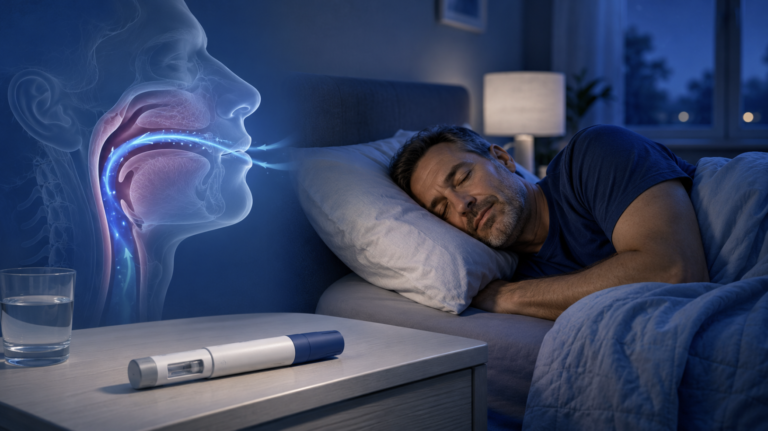
Active noise cancellation has moved far beyond headphones. From electric vehicles to experimental sleep devices, an ENT physician explains the wave physics behind ANC, where it works today, and where it still falls short.
Steph Curry’s flickering goggles aren’t a malfunction — they’re a vestibular training tool. Here’s the inner ear science an ENT specialist sees behind the hype.
PSAPs sell for a fraction of the cost of hearing aids — but can they deliver comparable results? Here’s what peer-reviewed clinical trials actually show about speech performance, noise handling, and real-world outcomes.
Olfactory loss is one of the earliest signs of Parkinson’s and Alzheimer’s disease — often appearing years before diagnosis. This article reviews the evidence, explains what AI-assisted MRI can now measure, and clarifies what smell loss does and does not mean for individual patients.
An AI-powered electronic nose can now classify scents with near-human accuracy. An ENT specialist examines what this means for diagnosing smell disorders — and what it doesn’t.
Discover why rapid weight loss medications like Ozempic and Wegovy are causing patients to experience echoing voices and severe ear fullness, and how ENTs manage this mechanical issue.
A Johns Hopkins iPhone study reported 100% accuracy. The real-world adherence number was 51%. Here is what works for actual patients trying to record their own ictal nystagmus — and the seven-step home recording protocol that closes the gap.